Honor your ideas. Make them flesh. Commit them to a more permanent medium than the ephemeral thoughts swirling inside your head. Inside your mind every idea is perfect and the act of recording them violates the sanctity of this false perfection in the ultimate pointless act. This line of thinking embodies self-delusion, procrastination, self-sabotage. Don't give in, even though it's easier than wrestling your ideas into reality.
Record your ideas. Put them on paper. Type them into electronic files. Scribe them onto clay tablets. Encode them in laser light. Break the myth of perfection and get on with the work of making them breathe. Give them the chance to survive in the outside world. If you don’t, one of two things will happen. You’ll lose them to the aether like a dream of the morning dew, or they will torment you by invading every thought and disrupting your sleep. Do both yourself and your ideas the favor of letting them out the first time they hit your mind.
Your ideas will suck. Some will need to be shredded by whirling blades, or crushed into pulp, or set alight to burn merrily and be heard no more. Expect this. Embrace this. Not every idea survives in this Darwinian thought space. Ideas rarely spring fully formed as Athena from Zeus’s head. When they do, you'll find the flaws soon enough.

Showing posts with label writing tips. Show all posts
Showing posts with label writing tips. Show all posts
2015-10-16
2014-01-21
[Writing Tips] The Police Blotter Exercise
Welcome to a Wombat's Writing Tips article. Check out the main page for more.
I was poking the fire in the wood stove the other night, and my wife says, "Don't set your beard on fire." One thing led to another and we played with writing it up as a police report for a while. I think my favorite permutation of that exercise was:
And this got me thinking: Can the brevity of a police report or headline help us focus on the core story? What happens when you strip out all the niggly details and side plots, and limit yourself to a dozen or so words to describe the story?
I've taken to calling this the Police Blotter Exercise.
You could give Lord of the Rings the police blotter treatment and get something like this:
I was poking the fire in the wood stove the other night, and my wife says, "Don't set your beard on fire." One thing led to another and we played with writing it up as a police report for a while. I think my favorite permutation of that exercise was:
Domestic disturbance. Husband pulled from wood stove, extinguished beard. Wife arrested.
 |
| "Just the facts, ma'am." Bang on. |
I've taken to calling this the Police Blotter Exercise.
You could give Lord of the Rings the police blotter treatment and get something like this:
Malicious destruction. Two short gentlemen destroyed ring that caused self-doubt, wars, betrayal.Or A Song of Ice and Fire:
Domestic disturbance. Warring kings ignore impending supernatural invasion. Winter is coming. Everyone dies.
2013-11-05
[Writing Tips] Know Your Audience
Welcome to a Wombat's Writing Tips article. Check out the main page for more.
Have you ever tried explaining Armor Class to your grandmother? If so, I bet you had a difficult time getting the concept across. How often will you run into that issue when you write? Or worse, how often will you explain something that the reader already understands and waste everyone's time?
Today's Problem: "I don't get it."
Games define terms to mean specific things, and those definitions create elements of a new language. Those who have never learned the language will take some time to get up to speed, whether starting from "What is a role-playing game?" or "How does this game differ from D&D?"
When talking with non-gamers, you'll need to start with very basic concepts like how to play a character in an imaginary world. If they've played Monopoly, there are tenuous parallels, but you may need to spend some time drawing lines and defining terms. Be patient, and be prepared to answer plenty of questions.
If you're dealing with established gamers learning a new system, you can tie the new system's concepts to whatever system they know. You can still run into trouble if you start defining their prized +4 Demonbane Sword as an Aspect or Stunt.
How much detail do you put into an article? Which concepts do you explain in detail, and which do you simply refer to the core rulebook? Do you need to cover how an RPG works or just how your RPG works? Will explaining basic concepts annoy your audience so they don't even finish your article? Do you need to explain past run-ins with Wulgalash, King of the Red Fang Orcs?
Solution: Know Your Reader.
Take some time to think about your audience. If you know who will read your article before you start, you can easily figure out where to start your explanation and how much detail you need. You have several scopes to consider when you're writing, and sometimes multiples in a single article.
In Sum
Pick an audience before you write and make that choice explicit to your editor. Your imagined audience will keep you honest about what terms you need to define as you write and what terms they already know. If you have the chance, find someone from your target audience to read a draft of your article before you submit it to make sure you use the appropriate level of detail.
Now get out there and engage your audience.
 |
| Unless, of course, your grandma pwns n00bs. |
Have you ever tried explaining Armor Class to your grandmother? If so, I bet you had a difficult time getting the concept across. How often will you run into that issue when you write? Or worse, how often will you explain something that the reader already understands and waste everyone's time?
Today's Problem: "I don't get it."
Games define terms to mean specific things, and those definitions create elements of a new language. Those who have never learned the language will take some time to get up to speed, whether starting from "What is a role-playing game?" or "How does this game differ from D&D?"
When talking with non-gamers, you'll need to start with very basic concepts like how to play a character in an imaginary world. If they've played Monopoly, there are tenuous parallels, but you may need to spend some time drawing lines and defining terms. Be patient, and be prepared to answer plenty of questions.
If you're dealing with established gamers learning a new system, you can tie the new system's concepts to whatever system they know. You can still run into trouble if you start defining their prized +4 Demonbane Sword as an Aspect or Stunt.
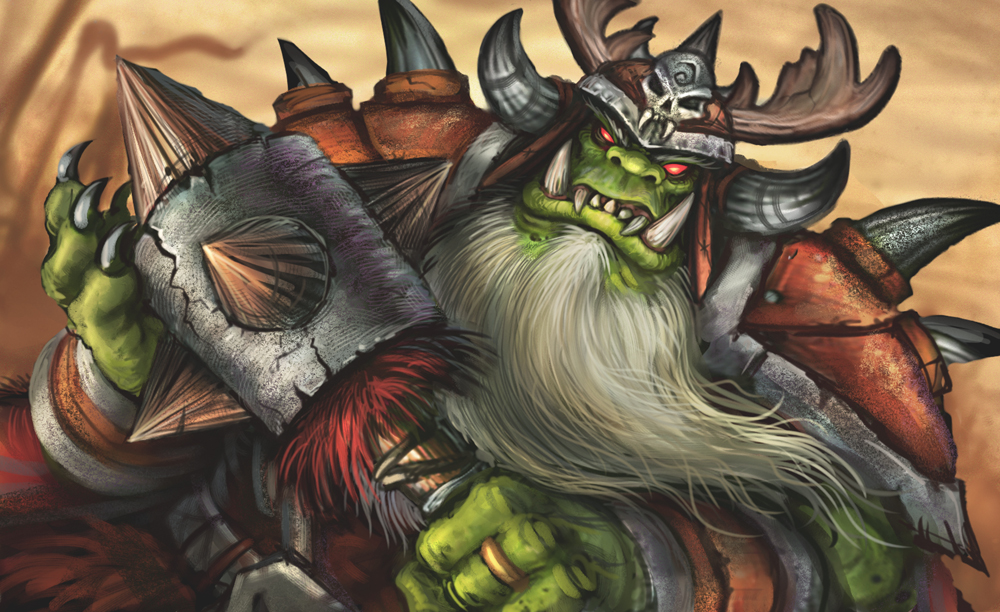 |
| What do you call the Orc King? Anything he wants. From Vegasmike at DeviantArt. |
Solution: Know Your Reader.
Take some time to think about your audience. If you know who will read your article before you start, you can easily figure out where to start your explanation and how much detail you need. You have several scopes to consider when you're writing, and sometimes multiples in a single article.
- Your gaming group knows the context of your campaign, so you can gloss over many historical details and get down to writing very specific stories and articles. Reaching a wider audience will require some backstory to fill in the gaps.
- Fans of a setting/game will know the inner workings of the game. Assume they know that a beholder runs the local crime syndicate or that Wolverine is notoriously hard to kill.
- Tabletop RPG players generally have a handle on the GM/Player setup, though they might not know how advantageous a +2 bonus is in a particular system.
- General gamers are tougher to pin down, since they could come from boardgames or MMOs or LARPs. If you're trying to reach out to a new audience, do your research so you can start talking their crazy health/mana language or trade wood for sheep.
- Non-gamers need major hand-holding. Stick to general concepts to introduce gaming, as advanced concepts like a complex alchemy system will probably go directly over their heads.
In Sum
 |
| Engage! |
Now get out there and engage your audience.
2013-07-26
The Thinking Verb Taboo, Idea Theft, Paper Reality, and Teachers
Today inspired me with a pile of high-octane brain food from online sources, so here I gather and share. Please click through to the original articles and read them for yourself. Each of these will pay dividends on the time you invest in reading them.
1) Thought Verbs by Chuck Palahniuk on Culture Porn
 A challenge for writers: For the next 6 months, don't use any thought verbs while writing.
Mere Existence and simple Thought no longer suffice. Act and Demonstrate to draw your reader into your writing.
2) "What If Someone Steals Your Idea?" as blogged by Daniel Solis
 Daniel's enthusiam and passion infect anyone in his immediate area. In this article he clears the mind's cobwebs and dispels meaningless fear on the way to working through your idea. An idea alone does not make a game, and at least part of the idea came from somewhere else in the first place. The development of that idea and the constant revision inherent in playtesting make a successful game, and that takes effort.
3) You Are Wrong: A Place to Start by Quinn Murphy on Thoughtcrime Games
Ideas stuck in your head will not serve you. Get past the perfect crystalline structure of your idea and start working out the flaws, but first you need to get your idea on paper. An editor (even you yourself) can't edit something that doesn't exist. Ideas in your head remain formless until you commit them to reality.
Here's my favorite passage from What Teachers Make:

Words to live by, even with all the "this"es. High octane.
(Note to self: Catch up on the entire Zen Pencils archive. Awesome stuff.)
What inspires you?
1) Thought Verbs by Chuck Palahniuk on Culture Porn
A challenge for writers: For the next 6 months, don't use any thought verbs while writing."These include: Thinks, Knows, Understands, Realizes, Believes, Wants, Remembers, Imagines, Desires, and a hundred others you love to use.Find these verbs in your writing and destroy them. Unpack them and lead the reader to figure out what the character thinks instead of using the crutch of looking into the character's head directly. Show, don't tell, but unpacked into observable action. He also reserves a section for is and have.
"The list should also include: Loves and Hates."
Mere Existence and simple Thought no longer suffice. Act and Demonstrate to draw your reader into your writing.
2) "What If Someone Steals Your Idea?" as blogged by Daniel Solis
Daniel's enthusiam and passion infect anyone in his immediate area. In this article he clears the mind's cobwebs and dispels meaningless fear on the way to working through your idea. An idea alone does not make a game, and at least part of the idea came from somewhere else in the first place. The development of that idea and the constant revision inherent in playtesting make a successful game, and that takes effort."NO GENIUS. NO MYSTIQUE. ONLY WORK."Also, get over yourself and stop worrying about intellectual property until after you create the property in the reality outside of your head. Which dovetails nicely into...
3) You Are Wrong: A Place to Start by Quinn Murphy on Thoughtcrime Games
Ideas stuck in your head will not serve you. Get past the perfect crystalline structure of your idea and start working out the flaws, but first you need to get your idea on paper. An editor (even you yourself) can't edit something that doesn't exist. Ideas in your head remain formless until you commit them to reality.
"'It was just so perfect, but I couldn’t find a way to express it!' is the phrase you can put on the tombstones of most of the world’s failed creative projects.4) What Teachers Make by Taylor Mali with art by Zen Pencils
Don’t make tombstones. Make art. Make games!"
Here's my favorite passage from What Teachers Make:

Words to live by, even with all the "this"es. High octane.
(Note to self: Catch up on the entire Zen Pencils archive. Awesome stuff.)
What inspires you?
2013-07-12
[Writing Tips] On Perspective and Fresh Eyes
Welcome to a Wombat's Writing Tips article. Check out the main page for more.
Last week, I went on vacation with my wife and daughter. We rented a cottage on Cape Cod, went on a whale watch, toured Edward Gorey's house, played Mice and Mystics almost every day, saw the Knorr docked at Woods Hole Oceanic Institute, watched fireworks displays up and down the coast on the 4th of July despite the clouds and wind, and spent a couple of days at the beach. I devoured John Scalzi's Agent to the Stars in 2 nights flat. I already want to go back, but maybe this time I won't need to sleep on a couch. (The bed situation in the cottage was not exactly as advertised.)
I intentionally put distance between myself and my usual life. I turned off notifications on my phone and checked when I thought about it instead of letting my phone vibrate and interrupt. I stopped responding to email because I discovered everything could wait. I didn't obsess over how the cats were handling the new feeding routine. I separated myself from some of my poorer habits and got away from juggling work, family, hobbies, and the day-to-day crap we all deal with, at least for a few days.
I made space in my head for new things and allowed myself to choose what I put there. I keep forgetting I have that power all the time, not just on vacation.
Hitting Walls
Our minds shape our realities. Sometimes we get stuck thinking that This Is The One True Path and that there's no other way. There's always another way, we just need perspective to find the subtle fork in whatever path we walk.
In writing and editing, sometimes I hit creative walls. There are times I think I've painted myself into a corner and there's no way out. Intellectually, I know that's not true, but in the heat of the moment my blinders snap into place and frustration starts taking control. I walk away from the project for a while to give myself the space I need to get around the problem.
For example, in one project I'm working on I've helped develop ideas to add gaming hooks over the past few weeks. Unfortunately, those ideas ran so far afield from the original project that it turned into an entirely different project which ultimately needed to be shelved so we could get back to the original project. In this case walking away morphed into generating ideas for a different but related project.
Sometimes walking away is as simple as playing a game on my cell phone. Sometimes I physically take a walk. Sometimes I wash dishes and lose myself in the repetition of scrubbing, rinsing, drying, and stacking. Sometimes I switch to a different project. Sometimes I go to bed.
What do I do when I hit my wall? Usually I do at least one of the following:
If I need to press through a block to get something done, I'm usually not happy about it. I make the best call I can just to get the draft done. But then I remind myself that I can rewrite it, and in some cases I look forward to the rewriting process.
I still struggle when editing my own work. I remember what I was like to write whatever I'm reading and I get stuck in the writing mode. I like getting feedback from someone else - it gives me a new perspective on the project and keeps me from getting stuck in my own head too much.
When I need to edit my own writing, I treat it like I'm playing an RPG. "Now I'm playing an editor. What would an editor think about this sentence here?" Sometimes it actually works.
Letting Minds Work
 The mind is a powerful thing. Sometimes you can ask it what to do and it'll answer immediately with a great idea. Sometimes it needs to chew on the problem for a while. Sometimes you'll wake up at 3 AM with the perfect idea for finishing that story that you got from a dream. You already use tricks to let you mind solve problems more effectively, whether you realize it or not. Figure out what they are and experiment with making them more effective and more intentional. Writing is a habit. Get your mind trained to write and you'll go far.
Give your mind the space to work and it'll serve you well. Push too hard and you'll end up hating the project. Keep pushing too hard and you'll hate writing.
Now get out there and give yourself a break, whatever that means to you.
Thanks for reading!
 |
| Discovered the RMS Titanic? Yeah, that Knorr. |
I intentionally put distance between myself and my usual life. I turned off notifications on my phone and checked when I thought about it instead of letting my phone vibrate and interrupt. I stopped responding to email because I discovered everything could wait. I didn't obsess over how the cats were handling the new feeding routine. I separated myself from some of my poorer habits and got away from juggling work, family, hobbies, and the day-to-day crap we all deal with, at least for a few days.
I made space in my head for new things and allowed myself to choose what I put there. I keep forgetting I have that power all the time, not just on vacation.
Hitting Walls
Our minds shape our realities. Sometimes we get stuck thinking that This Is The One True Path and that there's no other way. There's always another way, we just need perspective to find the subtle fork in whatever path we walk.
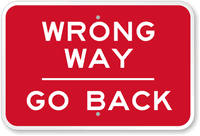 |
| A clear sign of trouble ahead? We should be so lucky. |
For example, in one project I'm working on I've helped develop ideas to add gaming hooks over the past few weeks. Unfortunately, those ideas ran so far afield from the original project that it turned into an entirely different project which ultimately needed to be shelved so we could get back to the original project. In this case walking away morphed into generating ideas for a different but related project.
Sometimes walking away is as simple as playing a game on my cell phone. Sometimes I physically take a walk. Sometimes I wash dishes and lose myself in the repetition of scrubbing, rinsing, drying, and stacking. Sometimes I switch to a different project. Sometimes I go to bed.
What do I do when I hit my wall? Usually I do at least one of the following:
- Breathe. More oxygen in your brain will help with anything you do. Breathing is the only thing you need to do in this one instant, so you may as well do it intentionally right now.
- Have a drink. I stick with water to keep my brain gears lubricated, but if you subscribe to the "Write drunk. Edit sober," idea, have at it.
- Change scale. Usually I'm stuck on a very specific detail. Looking at a wider picture reminds me that it's not that big a deal, which takes the pressure off. This helps me focus on the overall project (read more in Focus Your Intent).
- Take a break. Do something else for 10 minutes and let your mind work in a different mode. Something you see in Angry Birds or Kingdom Rush may trigger a new idea.
- Eat something. Hunger rarely helps my thought process. Then again, Thanksgiving Torpor torpedoes my productivity. Find balance. Also remember that Skittles and Sour Patch Kids give a massive sugar hangover.
- Go out to eat. Take care of both 4 and 5 at once. Talking with someone else over sushi helps me. Note to self: do this more.
- Sleep. Lack of sleep usually makes me think I have fewer options than I actually have. This one is tricky given my work schedule, but I tend to write productively on the train between 7 and 8 AM.
 |
| Pressing through walls. Boring. |
I still struggle when editing my own work. I remember what I was like to write whatever I'm reading and I get stuck in the writing mode. I like getting feedback from someone else - it gives me a new perspective on the project and keeps me from getting stuck in my own head too much.
When I need to edit my own writing, I treat it like I'm playing an RPG. "Now I'm playing an editor. What would an editor think about this sentence here?" Sometimes it actually works.
Letting Minds Work
The mind is a powerful thing. Sometimes you can ask it what to do and it'll answer immediately with a great idea. Sometimes it needs to chew on the problem for a while. Sometimes you'll wake up at 3 AM with the perfect idea for finishing that story that you got from a dream. You already use tricks to let you mind solve problems more effectively, whether you realize it or not. Figure out what they are and experiment with making them more effective and more intentional. Writing is a habit. Get your mind trained to write and you'll go far.Give your mind the space to work and it'll serve you well. Push too hard and you'll end up hating the project. Keep pushing too hard and you'll hate writing.
Now get out there and give yourself a break, whatever that means to you.
Thanks for reading!
2013-06-21
[Writing Tips] What Is Writing?
Welcome to a Wombat's Writing Tips article. Check out the main page for more.
We talk about writing, but how often do we sit back and think about what writing actually is?
My favorite definition of writing comes from Stephen King at the start of the "What Writing Is" section in his excellent book On Writing:
Ideas? Easy. Telepathy? Hard.
Every amateur writer asks the same question of an established author, "Where do you get your ideas?" Ideas are the easy part. Expressing them effectively challenges every writer. The work of creation lies in turning an idea into a work of art. Why do we call them works of art? Because they require work: intent, focus, and monumental effort. Also blood, sweat, and tears.
What, you think telepathy just comes naturally? Think again, and then get to work learning how to pack your thoughts into words. I'll get into choosing words without thesaurus shock in a future article, so stay tuned.
The Biological Metaphor
Writing acts as a symbolic representation of an idea's DNA. Letters and punctuation are our atoms pulled together into words akin to amino acids. We string words together into sentences, roughly like chromosomes. When the work is finished, we all see the entire strand of your idea's DNA ready for transmission. Ideas are viruses in a symbiotic relationship with our minds - ideas can't replicate or change without us, and our minds grow richer and more fertile with each new idea.
Just like with DNA, mutations occur. I mean this both in a physical sense where subsequent versions of a book get edited and updated, and in an idealogical sense where the idea transmitted by a particular piece of writing changes depending on the reader. In the latter case, the author has very little control over how the reader will receive the idea. You can say how you intended an idea to come across, but you can't dictate how an idea is actually perceived by the reader.
Here's the thing about ideas: MUTATIONS ARE SUPPOSED TO HAPPEN. How do we get new ideas? By learning about and combining other ideas. In the RPG world, nothing exemplifies this mutation process more than rules hacking and homebrew campaigns. The OSR movement reinterprets classic rules and changes them slightly to achieve different effects. Fate was originally a hack of Fudge. Taking an idea and extending or remixing it fuels creativity. Eventually you'll mutate far enough away from your pool of existing ideas that you create something seen as totally original.
Leaps vs. Steps
We place such a premium on breakthrough paradigm shifts that we neglect the tweaks and tiny innovations in the groundwork that made the new paradigm possible. Once you let an idea into the wild, it will change whether you want it to or not. You can fight the change, quashing creativity and upholding the integrity of your original work through legal action and threats, or you can embrace the community and welcome the flood of inspiration that you spawned. I know which path I'd choose.
Don't be afraid to read comments on your work. The nasty ones will hurt, but I think the risk of pain is worth finding the people who groove on your ideas. Once you find the groovy people and encourage them to create, and collaborate to make the next great thing.
Thanks for reading!
We talk about writing, but how often do we sit back and think about what writing actually is?
 |
| Buy it. Read it. Good stuff. |
"Telepathy, of course."I hadn't thought of writing that way before I read On Writing, but the idea clicked into place and now I can't think of it any other way. An author's mind forms an idea. The author chooses words and records them with the intent of recreating the same idea in the mind of the reader. The reader reads the author's work, and the idea - fundamentally the same idea - blooms in a different mind.
Ideas? Easy. Telepathy? Hard.
Every amateur writer asks the same question of an established author, "Where do you get your ideas?" Ideas are the easy part. Expressing them effectively challenges every writer. The work of creation lies in turning an idea into a work of art. Why do we call them works of art? Because they require work: intent, focus, and monumental effort. Also blood, sweat, and tears.
What, you think telepathy just comes naturally? Think again, and then get to work learning how to pack your thoughts into words. I'll get into choosing words without thesaurus shock in a future article, so stay tuned.
 |
| Increase this complexity by an order of magnitude. That's writing for you. |
Writing acts as a symbolic representation of an idea's DNA. Letters and punctuation are our atoms pulled together into words akin to amino acids. We string words together into sentences, roughly like chromosomes. When the work is finished, we all see the entire strand of your idea's DNA ready for transmission. Ideas are viruses in a symbiotic relationship with our minds - ideas can't replicate or change without us, and our minds grow richer and more fertile with each new idea.
Just like with DNA, mutations occur. I mean this both in a physical sense where subsequent versions of a book get edited and updated, and in an idealogical sense where the idea transmitted by a particular piece of writing changes depending on the reader. In the latter case, the author has very little control over how the reader will receive the idea. You can say how you intended an idea to come across, but you can't dictate how an idea is actually perceived by the reader.
Here's the thing about ideas: MUTATIONS ARE SUPPOSED TO HAPPEN. How do we get new ideas? By learning about and combining other ideas. In the RPG world, nothing exemplifies this mutation process more than rules hacking and homebrew campaigns. The OSR movement reinterprets classic rules and changes them slightly to achieve different effects. Fate was originally a hack of Fudge. Taking an idea and extending or remixing it fuels creativity. Eventually you'll mutate far enough away from your pool of existing ideas that you create something seen as totally original.
Leaps vs. Steps
 |
| So many tiny steps, one giant leap. |
Don't be afraid to read comments on your work. The nasty ones will hurt, but I think the risk of pain is worth finding the people who groove on your ideas. Once you find the groovy people and encourage them to create, and collaborate to make the next great thing.
Thanks for reading!
2013-06-07
[Writing Tips] "To Be" Or Not "To Be"?
Welcome to a Wombat's Writing Tips article. Check out the main page for more.
 I saw several maps about regional differences in US dialects in a discussion on Google+. The comments focused on the peculiarities of Pittsburghese for a bit ("Counter needs washed, yinz."), and this Shakespeare joke made me laugh out loud.
The Best Writing Advice I've Ever Received
Back in college I thought I was a decent writer. I had dabbled in poetry through high school, mostly angsty I-live-in-the-'80s-and-the-world-is-going-to-end-in-nuclear-fueled-fire-so-what's-the-point, not-quite-goth stuff (standard fare for the day), and I had these delusions of making a creative career for myself. I've always struggled with keeping on topic, a fault which serves me fairly well when blogging. But I digress...
I gravitated to drama at WPI. I had been on stage in musicals with a community youth theater since age 11, so I had a certain comfort level with acting and singing. And since WPI mandates a project in humanities to promote well-rounded engineers, I started acting again and taking drama classes with Susan Vick.
I wrote a paper reacting to one of the plays we studied. I struggled with it, rewrote it, and it still bored me to tears. I met with Susan about it, and she gave me the best writing advice I've ever received.
And here I am 25 years later giving the exact same advice to you.
Is Good Writing Really That Simple?
No single rule will make you a well-rounded writer, but this one has served me well because it taught me awareness. I had been writing mostly on instinct, focusing on an ethereal "How does this sound?" rather than paying attention to the craft of writing. I still work from my gut, but I'm constantly learning new ways to articulate why a passage doesn't work for me.
When I went through that first paper, looking for "to be" made me pay attention to the verbs I chose and how each one makes the overall piece feel. Once I became aware of my verb choices, I never took them for granted again. Sometimes I'm lazy on a first draft, but it doesn't take long for the editor in my head to start asking some pointed questions about the preponderance of is, was, and were in whatever I write.
As humans, we crave action. When we read we want to feel like we're part of the action, or at least in the front row of spectators so we feel the breeze as the action whizzes by. When we choose "to be" as our main verb we describe existence, not action. Readers will get a sense of stasis instead of feeling the motion we describe. Stasis is boring. Action compels.
Let me give you an example.
If we focus on the verbs and juggle things around, we can make this passage do something more than just sit there and barely explain what's happening. We can show action rather than talk about the situation.
By choosing active verbs we get a better sense of the world by moving through it. We paint a vivid picture in varied strokes, lines, curves, and twirls rather than a dot on the canvas for each discrete moment of existence. Variation keeps readers hooked on what comes next. Repetition spells boredom, and boredom prevents readers from finishing what you wrote.
Expect Exceptions
I hope you find this technique useful, but don't expect to eliminate every instance of "to be". You don't need to catch them all. If this tip becomes the only tool in your writing toolbox, you'll spend all your time fighting your draft to avoid using "was" when you could spend it improving your content. It's not worth the effort when you settle on something that's far too convoluted to read. You'll end up rewriting it anyway when your editor calls you on it.
There will always be exceptions. Sometimes things simply are, and that's just ducky. Be zealous in your diversity instead of slavish devotion to rules and you'll be fine.
Now get out there, consciously choose effective verbs, and draw your readers in.
I saw several maps about regional differences in US dialects in a discussion on Google+. The comments focused on the peculiarities of Pittsburghese for a bit ("Counter needs washed, yinz."), and this Shakespeare joke made me laugh out loud."... or not ..."I had planned to write this article later, but apparently the universe wants it published now. So be it. This tip works for all kinds of writing, but I think I've given this note or changed at least one "to be" in every RPG project I've ever edited.
- Hamlet (Prince of Pittsburgh)
The Best Writing Advice I've Ever Received
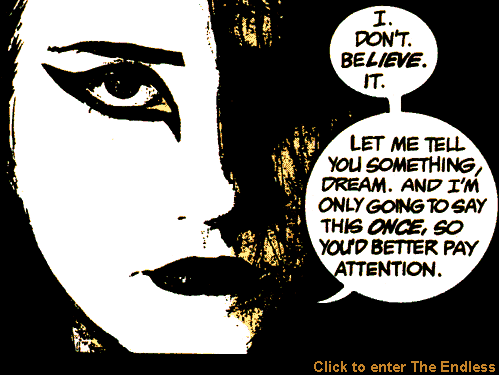 |
| High school was less cool than this. Found at The Endless on oddball.net. |
I gravitated to drama at WPI. I had been on stage in musicals with a community youth theater since age 11, so I had a certain comfort level with acting and singing. And since WPI mandates a project in humanities to promote well-rounded engineers, I started acting again and taking drama classes with Susan Vick.
I wrote a paper reacting to one of the plays we studied. I struggled with it, rewrote it, and it still bored me to tears. I met with Susan about it, and she gave me the best writing advice I've ever received.
"Rewrite this. Go back through, find every instance of the verb 'to be', and change each one to a different verb instead."It sounded like busy work, but I gave it a shot. The paper went from a tortured high school research paper to something readable and almost interesting in about a half hour. I didn't expect so dramatic an effect by using one simple technique. I was hooked.
And here I am 25 years later giving the exact same advice to you.
 |
| Found at Belle Noir. |
No single rule will make you a well-rounded writer, but this one has served me well because it taught me awareness. I had been writing mostly on instinct, focusing on an ethereal "How does this sound?" rather than paying attention to the craft of writing. I still work from my gut, but I'm constantly learning new ways to articulate why a passage doesn't work for me.
When I went through that first paper, looking for "to be" made me pay attention to the verbs I chose and how each one makes the overall piece feel. Once I became aware of my verb choices, I never took them for granted again. Sometimes I'm lazy on a first draft, but it doesn't take long for the editor in my head to start asking some pointed questions about the preponderance of is, was, and were in whatever I write.
As humans, we crave action. When we read we want to feel like we're part of the action, or at least in the front row of spectators so we feel the breeze as the action whizzes by. When we choose "to be" as our main verb we describe existence, not action. Readers will get a sense of stasis instead of feeling the motion we describe. Stasis is boring. Action compels.
 |
| You can hear this voice in your head. |
Let me give you an example.
He was riding the train to work when he was surprised by the intercom, announcing in that pleasantly neutral female voice that his stop was next. His tardiness was a perennial problem.Things happen to the protagonist. He changes his state but never truly reacts. As a reader I spend so much time untangling this sentence that I'm tired after reading it. Imagine a whole book filled with language like this and I double dog dare you not to shudder at the thought. Granted, this sentence has more problems than simple verb choice, but it's early and I'm on the train. I'll dive deeper into passive voice in a different article, but for now know that targeting "to be" for removal will help eliminate passive voice as well.
If we focus on the verbs and juggle things around, we can make this passage do something more than just sit there and barely explain what's happening. We can show action rather than talk about the situation.
The pleasantly neutral female voice emitted from the car's speaker and dragged him back to the grim reality of his uncomfortable train seat. He leapt up to avoid missing his stop. He couldn't afford another black mark for tardiness.Now we see things actually happening rather than following a string of "was"es. The voice emitted. The voice dragged him back. He leapt up. He couldn't afford another black mark. Smart verb choices eliminate the need for many adverbs (another future article) which creates tighter writing overall. Which communicates more effectively to you: "He walked quickly" or "He hustled"?
 |
| D. R. is my favorite pseudo- Shakespeare. Linked from Mind the Oranges, Marlon! |
By choosing active verbs we get a better sense of the world by moving through it. We paint a vivid picture in varied strokes, lines, curves, and twirls rather than a dot on the canvas for each discrete moment of existence. Variation keeps readers hooked on what comes next. Repetition spells boredom, and boredom prevents readers from finishing what you wrote.
Expect Exceptions
I hope you find this technique useful, but don't expect to eliminate every instance of "to be". You don't need to catch them all. If this tip becomes the only tool in your writing toolbox, you'll spend all your time fighting your draft to avoid using "was" when you could spend it improving your content. It's not worth the effort when you settle on something that's far too convoluted to read. You'll end up rewriting it anyway when your editor calls you on it.
There will always be exceptions. Sometimes things simply are, and that's just ducky. Be zealous in your diversity instead of slavish devotion to rules and you'll be fine.
Now get out there, consciously choose effective verbs, and draw your readers in.
2013-05-31
[Writing Tips] I'm Of Two Minds
Welcome to a Wombat's Writing Tips article. Check out the main page for more.
I wanted to finish the Know Your Audience article today, but the more I looked at it the less focused it got. I found myself slipping down the rathole of making a big list, and that level of detail crossed the line from informative to pedantic. So I'm punting. I'll rework that article and publish it later.
Look! Editing in action! Let's look a little closer...
Two Minds
Two modes of thought guide my editing process. First, the quick-twitch, left-brain, Type A mind picks out typos, poor word choices, and other issues that I can fix in 20 seconds or less. This mode picks through a piece sentence by sentence and looks at the short-term tactical picture. I've gotten to the point where I can usually do some of this editing while I write, which slows me down but produces a cleaner first draft.
The larger part of editing uses the slow-twitch, right-brain, Type B, strategic mind. This mode figures out the structural issues and ideas that underlie a piece of writing, then (more importantly) articulates the problem and suggests ways to fix it. It picks out the good ideas and recommends cutting the ideas that don't support the piece's main focus. This process requires time to digest the entire piece and reflect, so this mind will wake you up at 2AM with a breakthrough on how to approach a sticky section of text.
My strategic mind told me the audience article had started to suck.
My tactical mind would have been up all night, happily fixing things.
I walked away from it and wrote this instead.
It takes both minds to edit effectively. Working with one mind exclusively will get you either a super proofreader or a back-seat developer who has a hard time polishing. Both of those have their merits, but combining both approaches in a single editor will get you more useful feedback on your piece. Fixing things in one mode can resolve issues in the other. For instance, if the strategic mind reframes the piece's tone from a dry history book to more of an adventure story, that change removes the need for constantly using passive verbs which drove the tactical mind to drink.
Why think about this?
Good writing needs balance. You can have a brilliant idea, but few people will read it if your typo-riddled wishy-washy text distracts them too much. Using precise words will get your point across, but if the point of your article boils down to "Hitting monsters more often requires rolling dice well," how many of your readers will comment to strenuously wish for those five minutes of their life back?
I could have improved the list that I had written until the words shone and called you to immediate action, but a well-polished turd is still a turd. I chose the wiser strategy and ultimately the path of less wasted time.
The Road to Mastery
How can you develop each of these traits? Practice. The only substitute for experience is experience. You can pick apart game rules by reading them, but until you see how they work by playing the game you don't know how they all fit together. The same holds for writing and editing.
If you want to write, start writing. If you want to edit, edit something. Yes, you'll suck at first, but accept that fact and learn as much as you can from your failures. This is how you bridge the creative gap from not doing anything because you're afraid of sucking to mastering your craft.
For those of you who haven't heard Ira Glass talk about the creative gap...
Now get out there, fail with pride, and learn your chosen craft.
I wanted to finish the Know Your Audience article today, but the more I looked at it the less focused it got. I found myself slipping down the rathole of making a big list, and that level of detail crossed the line from informative to pedantic. So I'm punting. I'll rework that article and publish it later.
 |
| Ettins: the extreme case. Granted, "minds" may be over-generous. |
Look! Editing in action! Let's look a little closer...
Two Minds
Two modes of thought guide my editing process. First, the quick-twitch, left-brain, Type A mind picks out typos, poor word choices, and other issues that I can fix in 20 seconds or less. This mode picks through a piece sentence by sentence and looks at the short-term tactical picture. I've gotten to the point where I can usually do some of this editing while I write, which slows me down but produces a cleaner first draft.
The larger part of editing uses the slow-twitch, right-brain, Type B, strategic mind. This mode figures out the structural issues and ideas that underlie a piece of writing, then (more importantly) articulates the problem and suggests ways to fix it. It picks out the good ideas and recommends cutting the ideas that don't support the piece's main focus. This process requires time to digest the entire piece and reflect, so this mind will wake you up at 2AM with a breakthrough on how to approach a sticky section of text.
My strategic mind told me the audience article had started to suck.
My tactical mind would have been up all night, happily fixing things.
I walked away from it and wrote this instead.
It takes both minds to edit effectively. Working with one mind exclusively will get you either a super proofreader or a back-seat developer who has a hard time polishing. Both of those have their merits, but combining both approaches in a single editor will get you more useful feedback on your piece. Fixing things in one mode can resolve issues in the other. For instance, if the strategic mind reframes the piece's tone from a dry history book to more of an adventure story, that change removes the need for constantly using passive verbs which drove the tactical mind to drink.
Why think about this?
Good writing needs balance. You can have a brilliant idea, but few people will read it if your typo-riddled wishy-washy text distracts them too much. Using precise words will get your point across, but if the point of your article boils down to "Hitting monsters more often requires rolling dice well," how many of your readers will comment to strenuously wish for those five minutes of their life back?
 |
| Just ask the Mythbusters. |
The Road to Mastery
How can you develop each of these traits? Practice. The only substitute for experience is experience. You can pick apart game rules by reading them, but until you see how they work by playing the game you don't know how they all fit together. The same holds for writing and editing.
If you want to write, start writing. If you want to edit, edit something. Yes, you'll suck at first, but accept that fact and learn as much as you can from your failures. This is how you bridge the creative gap from not doing anything because you're afraid of sucking to mastering your craft.
For those of you who haven't heard Ira Glass talk about the creative gap...
Is there more to learn? Always.
Mastery does not mean you have nothing left to learn.
Mastery means you can finally start learning things nobody knows.
The really interesting stuff. Groundbreaking things.
You will always have more to learn.
2013-05-24
[Writing Tips] An Editing Example
Welcome to a Wombat's Writing Tips article. Check out the main page for more.
Today we detour deep into the editing process.
I've been following John Adamus's article series entitled Editing Out In The Open. If you haven't, click through immediately and go catch up. The two examples of editing he gives really open up the process and give a great overview of what to expect if you've never worked with an editor before.
His latest article gives an example of Game Flavor Text. We got to talking on G+ and he talked me into Line Editing the same manuscript to provide some contrast to his example of Developmental Editing. I'll explore the different types of editing in a future Writing Tips article, so you'll see links to his article and this one again when that article gets published. I'm not as eye-meltingly fast as John, but I managed to get this turned around in 8 hours (I was commuting and eating dinner and doing dishes and tucking in my daughter in that time as well).
A big thank you goes to Jeff Dougan for letting us both critique his manuscript in public. Be sure to check out the plans for A Holiday Feast of Gaming this November, and start working on articles for the blogfest now.
DISCLAIMER: I have a really hard time keeping my mouth shut when confronted with something I have the power to fix. I tried not to dig too deep into the developmental side, but I couldn't leave that first paragraph alone.
Per John's formatting inline edits are incrimson red, and comments are in blue.
At the end of the Dawn War, the gods sat back to observe the world they had created. Khala’s power was tied to the cold, but as the goddess of winter, she could observe wherever water traveled. (These 2 sentences set the stage, but they don't really tell the story of the mirror. A different intro mentioning the Dawn War and showing us Khala's decision to create the mirror would work much more effectively here.) Traveling to the largest glacier at the heart of the winter, she removed a sliceShe carved a circle of ice as thick as her hand from the largest glacier in the Heart of Winter, bound it in silver, and polished it with snowflakes until it shone like a mirror. Laid on its side, it seemed to be looked like a frozen lake on the valley floor. (What valley? This sentence is redundant since we know it's polished and you can add a size reference in the previous sentence if needed. Consider deleting.) As Khala wove the words of power to enchant the mirror, a tendril reached outfrom she didn't notice the Chained God reaching out a lone tendril,unnoticed by the lady of winter. His touch on the magic caused the mirror to distort what she saw, perceiving and show her only the worst of anything reflected in the mirror., but iIt also amplified the spell beyond Khala’s intent, granting the mirror the power to bend control those anyone reflected in it to her will. (I'm missing the "Why?" here. If Khala can look through any water in the world, why did she make the mirror in the first place? Consider rewriting this whole paragraph.)
When forced to surrender her power to the usurping death goddess, Khala’s last act of spite was to break broke the great scrying crystalmirror out of spite, shattering the ice and sending shards flying off in all directions. Unknown to her, these shards still bore the taint of the Chained God. Magically connected to each other, (This phrase seems obvious, so I'd delete it.) the shards of the mirror make those who are touched byanyone touching them more vulnerable to the mirror’s power. Even worse, when under the mirror’s influence they are open to the Chained God’s may touch anyone under the mirror’s influence, if he should chance to reach out, and tThose who dare to use the mirror are make themselves even more vulnerable.
Greatest of Khala’s retainers, was the exarch known as the Snow Queen, who spread the snows as winter approached and guided their retreat as spring approachedreturned. When the Raven Queen assumed control of the winter snows, the Snow Queen herself refused to bow to the goddess she saw as a usurper. Absconding with the largest fragment of Khala’s Mirror, she retreated not to the Shadowfell where Nerull’s bride kept her abode, but instead to the coldest reaches of the Feywild. Some suspect her influence in transforming the Sun Prince into the mighty fey being known as the Prince of Frost. Certainly, hHer snowflake retainers can sometimes be seenvisit the Fortress of Frozen Tears as honored guests. inside the Fortress of Frozen Tears. (I see plenty of name-dropping here. I don't have a clear idea of who "Nerull's bride" is. I'd connect alternate names a little more explicitly here if you can.)
Only rarely does tThe Snow Queen rarely leaves her palace without being the accompanimented by of many of her retainers. ("Retainers" is used here and up above to describe the Snow Queen. I'd pick another term for one of these relationships to avoid confusion.) Often, they may be present frolic in lighter snowstorms, even when their monarch herself has not chosen to venture forth fromremain in the Heart of Winter. Serving as her eyes and ears, they are quick to advance dart to the attack, quick to retreat quickly, and ride the winds with unmatched skill. Bitter foes of the Sorrowsworn, they will often summon reinforcements and swarm the Raven Queen’s servants who fool enough to venture out of the realms of the Shadowfell.
At times, tThe Show Snow Queen appears to seeks to reassemble all the lost fragments of Khala’s great mirror. If she did so, it is entirely possible that she could challenge the Raven Queen herself, especially ifwith the Prince of Frost were to rideriding forth at her side. (I changed the meaning here to remove the half-heartedness. Now I know what she's doing instead of what she appears to occasionally do.)
*******
Let me know if you have any questions, and I look forward to working through the next version.
*******
Note to self: Formatting edits from Word to display correctly in a blog post will leave a mark.
I feel like I've just been part of an Edit-Off. Going head-to-head with another editor on the same piece is a new experience for me, but the vulnerability and fear of not measuring up is more than worth the view into someone else's editing process. We edited with different intents so we looked for different things, but that doesn't make the insights any less powerful. This exercise was well worth the time investment.
I find it fascinating to read what John commented on that I would probably let go, and more fascinating to see what John skipped that just sets my teeth on edge. There's no right way to edit, and it's very much an art to spot the clunky bits and make suggestions. We each have very different styles in our editing.
And that's awesome.
If you've made it this far, please go take a look at John's GoFundMe Campaign. If you can spare a few bucks, he could use a hand making ends meet this summer.
And John, thank you. Anytime you want to do something like this again, please let me know. This experience rocked hard and taught me plenty.
Thanks for reading. Feel free to comment if you got something out of this experiment, and please let me know if want to see more things like this.
Today we detour deep into the editing process.
I've been following John Adamus's article series entitled Editing Out In The Open. If you haven't, click through immediately and go catch up. The two examples of editing he gives really open up the process and give a great overview of what to expect if you've never worked with an editor before.
His latest article gives an example of Game Flavor Text. We got to talking on G+ and he talked me into Line Editing the same manuscript to provide some contrast to his example of Developmental Editing. I'll explore the different types of editing in a future Writing Tips article, so you'll see links to his article and this one again when that article gets published. I'm not as eye-meltingly fast as John, but I managed to get this turned around in 8 hours (I was commuting and eating dinner and doing dishes and tucking in my daughter in that time as well).
A big thank you goes to Jeff Dougan for letting us both critique his manuscript in public. Be sure to check out the plans for A Holiday Feast of Gaming this November, and start working on articles for the blogfest now.
DISCLAIMER: I have a really hard time keeping my mouth shut when confronted with something I have the power to fix. I tried not to dig too deep into the developmental side, but I couldn't leave that first paragraph alone.
Per John's formatting inline edits are in
At the end of the Dawn War, the gods sat back to observe the world they had created. Khala’s power was tied to the cold, but as the goddess of winter
When forced to surrender her power to the usurping death goddess, Khala
Hard of heart herself, (Were you going for alliteration here? Also this "hard of heart" reference totally comes out of left field.) the Snow Queen now roams the world and the Feywild, although her dislike of the Raven Queen keeps her far away from the walls of Letherna. She occasionally spots a mortal to whom she takes a capricious fancy to a mortal, and may transport that individual off to the Heart of Winter for a time, until that mortal freezes to death despite the gifts she bestows. She can otherwise be found visits any place where there is with water, for all water can has the potential to become snow and ice. When her ire is roused anger rises, expect a blizzard to ravage the area.
The cover email would go something like this:
Jeff,
I've attached the edited version of the Snow Queen flavor text. I like the feeling of it, but the story is hard to follow in spots. I’d ask you some deeper questions about what you’re going for here, but I don’t want to stray too far into development editor territory. I've added inline comments where appropriate, but here are some overall notes:
- You lost me in the first paragraph. It jumps around too much and doesn't tell a coherent story. It feels almost like you’re adding references without tying them solidly to the story, and it comes across as fragmented and confusing. I found myself wondering why Khala would make the mirror in the first place, and that uncertainty colored the way I read the rest of it. If you could rewrite the origin story with these things in mind, I think the whole piece would really catch my interest and flow much more easily from there.
- Watch your verb choice. Passive voice rears its ugly head in here, which makes it more preachy than showy. I'd use active verbs to fire the imagination wherever you can. Example: In the second paragraph I changed “...those who are touched by them...” to “...anyone touching them...” which conveys the same idea in half the words without people waiting around passively to be touched.
Thanks!
-w
-w
*******
Note to self: Formatting edits from Word to display correctly in a blog post will leave a mark.
I feel like I've just been part of an Edit-Off. Going head-to-head with another editor on the same piece is a new experience for me, but the vulnerability and fear of not measuring up is more than worth the view into someone else's editing process. We edited with different intents so we looked for different things, but that doesn't make the insights any less powerful. This exercise was well worth the time investment.
I find it fascinating to read what John commented on that I would probably let go, and more fascinating to see what John skipped that just sets my teeth on edge. There's no right way to edit, and it's very much an art to spot the clunky bits and make suggestions. We each have very different styles in our editing.
And that's awesome.
If you've made it this far, please go take a look at John's GoFundMe Campaign. If you can spare a few bucks, he could use a hand making ends meet this summer.
And John, thank you. Anytime you want to do something like this again, please let me know. This experience rocked hard and taught me plenty.
Thanks for reading. Feel free to comment if you got something out of this experiment, and please let me know if want to see more things like this.
2013-05-20
[Writing Tips] Focus Your Intent
Welcome to a Wombat's Writing Tips article. Check out the main page for more.
If you start a writing project without setting some boundaries, how do you know when you're done?
In other words, what belongs in a core rulebook and what should wait for a supplement?
Today's Problem: The Idea Cascade
I've seen this issue plenty of times, and I still struggle with it in my own writing. I start writing an article before I have a clear idea of what the heck it's about. More often than not one idea leads to another, and before I know it I have 3 or 4 ideas jammed into a piece in ways that make the editor in me cringe. Every idea can stand on its own, but I still decide to ram them together into one article.
With too many ideas in a single piece, two things happen. First, the word count gets blown out of the water. Articles slated for 3,000 words end up at 4,500 or more which makes publishers cranky. Second, when I trim words each idea gets so watered down or explained so briefly that none of them shine the way they could if they each became the central focus of their own article. In especially bad cases, none of the ideas even make sense any more, and I itch to toss the whole article and start over.
Your writing process may vary, but I tend to get lost down a maze of twisty passages all alike if I don't start with some sort of focus.
Solution: Focus on your Subject
Think about the intent behind what you're writing. The more thought you put into it before you start, the less rewriting and untangling of ideas you'll need to do later. I'm not advocating a written project plan for every article idea, but spending a few minutes to clarify your article's intent in your head will save you headaches down the road. Something as simple as "An overview of the Dwarven pantheon" will work. Just treat it like a Fate Aspect - it needs to have a negative edge so you don't keep adding topics that don't quite fit.
Here are a few things I keep telling myself to do. Maybe one of these days I'll actually listen.
1. What Project Parameters Do You Know?
Ideas don't come completely out of nowhere. Either you find an empty spot in the RPG Rulesverse that begs you to fill it, or you want to improve something that already exists, or you pitch a supplement to a publisher and get an assignment. In each of those cases, you can sense the rough shape of the project.
If you're working for a publisher, usually you have a leg up. Either you've spent the time developing a pitch for something you want to write, or the publisher has sent you a list of requirements. Usually you'll get a word count to shoot for: 1,000 (1K) words for quick articles, 5-20K words for adventures and supplements, up to 100K+ words for a large supplement or campaign guide. Usually you know the subject and a working title. I've overused "usually" above because publishers work in many different ways, so you may only get vague handwaving to start from.
If you have no direction from your publisher or if you're doing something on your own, spend a few minutes to come up with some goals and parameters. Is this for your home campaign or do you want to try to sell what you write? We'll get into this more in the next article entitled Know Your Audience. How long (word-wise and time-wise) do you think it will take to develop this idea? Would it make sense to write it as a one-page PDF, a new setting, a new system, or an ongoing series of blog posts?
Contrary to popular belief size is important, especially for anything someone else will publish.
2. Limit Your Subject.
Even if you already have a working title, always ask yourself, "What is this project about?" Your answer becomes your subject statement, and you can keep track of it on a scrap of paper or in your head. I recommend paper, because it's much more obvious and deliberate when I change my subject statement on paper than if I just keep it in my head and change it with a thought.
When you think about what your project is about, always consider what it's NOT about as well. Consider it like a Fate Aspect or a Marvel Distinction: your article's subject should have a problematic side to tell you what the article won't cover as well as what it will. Even if you don't refer to it while writing, you'll need that negative boundary for the next tip. For example, if you write an article about the ecology of Shangri-La, steer clear of Shangri-La's political scene; put that idea in its own article or your readers will get confused.
Now you know where to draw the line between what your article should cover and what it shouldn't. You can refer to your subject statement while you write to make sure you stick to the plan, but please ignore it if it keeps you from writing. If you slow down and debate every sentence you write because you worry about fitting your subject, set your subject statement aside and just write for a while. I would rather have words flowing into a first draft document than let my internal editor yell at me all afternoon and end up with nothing written.
If you can juggle the subject statement and writing, great. If not, just get the draft done. Don't worry, we'll cut out what doesn't make sense after you finish your first stab at the article.
3. Enforce Your Subject Limits. Be Ruthless.
After you complete your first draft (emphasis on AFTER), read back through your article and cut anything that doesn't directly feed your chosen subject. Yes, you've moved from writing to self-editing, but I advise you to get used to rewriting and taking criticism. Even Shakespeare rewrote his plays because very rarely does anything leap out of anyone's brain fully-formed.
Make no mistake: This Is Hard. Taking your ideas and cutting them because they don't fit your article hurts, sometimes physically. Self-editing can feel very much like self-flagellation: you reject yourself to drive out the demons of mediocrity. To soften the blow, save everything you cut and tell yourself that you'll develop another article around that idea later. Don't debate the value of everything you cut now or that's all you'll do; just save your cuts for later and move on. Changing my internal self-editing dialogue from "NO!" to "We'll come back to this idea later" helps to keep me calm. We can debate "sane" later.
If you find yourself falling short of your word count, congratulations! Over 90% of RPG writers suffer from run-on ideas, but not you! Also: Don't panic. Read your draft and figure out where you can add more details, or better yet add examples of whatever you're writing about in action. If you write about Gnomish Pun Dueling Jesters, make sure to include a sample exchange with the worst puns you've ever heard, for example.
Your readers will thank you for clear examples, if not for Gnomish Pun Dueling Jesters.
BONUS TIP
I'll break the rules I talk about at least once in every article. To that end this tip fits more with self-editing rather than the overall topic, but I'm including it anyway.
4. Read Your Words Out Loud.
Speaking of Shakespeare, feel free to use the old playwright's trick: read what you wrote out loud. If nobody would ever say the words you wrote, change your words. If you repeatedly stumble when reading a specific spot, your brain can't comprehend how those particular words fit together, which means your readers will probably need to reread that passage a couple of times to understand it. Go back to the spots you stumbled and see if you can rework the text flow so your ideas come across more smoothly.
In Sum
Today's tips cover more planning and editing than actual writing, but that doesn't make them any less important.
1. Start with what you know about the writing project.
2. Write a Subject Statement to clearly define what it will cover and what it won't.
3. Self-edit your draft to remove everything that doesn't fit your Subject Statement.
4. Read your writing out loud to check for clumsy bits.
Now go out there and think about what you write before you drown in your writing assignment.
If you start a writing project without setting some boundaries, how do you know when you're done?
In other words, what belongs in a core rulebook and what should wait for a supplement?
Today's Problem: The Idea Cascade
I've seen this issue plenty of times, and I still struggle with it in my own writing. I start writing an article before I have a clear idea of what the heck it's about. More often than not one idea leads to another, and before I know it I have 3 or 4 ideas jammed into a piece in ways that make the editor in me cringe. Every idea can stand on its own, but I still decide to ram them together into one article.
 |
| An editing primer. Recommended by John Adamus. |
Your writing process may vary, but I tend to get lost down a maze of twisty passages all alike if I don't start with some sort of focus.
Solution: Focus on your Subject
Think about the intent behind what you're writing. The more thought you put into it before you start, the less rewriting and untangling of ideas you'll need to do later. I'm not advocating a written project plan for every article idea, but spending a few minutes to clarify your article's intent in your head will save you headaches down the road. Something as simple as "An overview of the Dwarven pantheon" will work. Just treat it like a Fate Aspect - it needs to have a negative edge so you don't keep adding topics that don't quite fit.
Here are a few things I keep telling myself to do. Maybe one of these days I'll actually listen.
1. What Project Parameters Do You Know?
Ideas don't come completely out of nowhere. Either you find an empty spot in the RPG Rulesverse that begs you to fill it, or you want to improve something that already exists, or you pitch a supplement to a publisher and get an assignment. In each of those cases, you can sense the rough shape of the project.
 |
| Check the current submission guidelines for Dragon. |
If you have no direction from your publisher or if you're doing something on your own, spend a few minutes to come up with some goals and parameters. Is this for your home campaign or do you want to try to sell what you write? We'll get into this more in the next article entitled Know Your Audience. How long (word-wise and time-wise) do you think it will take to develop this idea? Would it make sense to write it as a one-page PDF, a new setting, a new system, or an ongoing series of blog posts?
Contrary to popular belief size is important, especially for anything someone else will publish.
2. Limit Your Subject.
Even if you already have a working title, always ask yourself, "What is this project about?" Your answer becomes your subject statement, and you can keep track of it on a scrap of paper or in your head. I recommend paper, because it's much more obvious and deliberate when I change my subject statement on paper than if I just keep it in my head and change it with a thought.
 |
| Don't overload your poor article. Image spotted at Papers & Pencils. |
Now you know where to draw the line between what your article should cover and what it shouldn't. You can refer to your subject statement while you write to make sure you stick to the plan, but please ignore it if it keeps you from writing. If you slow down and debate every sentence you write because you worry about fitting your subject, set your subject statement aside and just write for a while. I would rather have words flowing into a first draft document than let my internal editor yell at me all afternoon and end up with nothing written.
If you can juggle the subject statement and writing, great. If not, just get the draft done. Don't worry, we'll cut out what doesn't make sense after you finish your first stab at the article.
3. Enforce Your Subject Limits. Be Ruthless.
After you complete your first draft (emphasis on AFTER), read back through your article and cut anything that doesn't directly feed your chosen subject. Yes, you've moved from writing to self-editing, but I advise you to get used to rewriting and taking criticism. Even Shakespeare rewrote his plays because very rarely does anything leap out of anyone's brain fully-formed.
Make no mistake: This Is Hard. Taking your ideas and cutting them because they don't fit your article hurts, sometimes physically. Self-editing can feel very much like self-flagellation: you reject yourself to drive out the demons of mediocrity. To soften the blow, save everything you cut and tell yourself that you'll develop another article around that idea later. Don't debate the value of everything you cut now or that's all you'll do; just save your cuts for later and move on. Changing my internal self-editing dialogue from "NO!" to "We'll come back to this idea later" helps to keep me calm. We can debate "sane" later.
 |
| Beware of pun fallout. Original by Phil Foglio. |
If you find yourself falling short of your word count, congratulations! Over 90% of RPG writers suffer from run-on ideas, but not you! Also: Don't panic. Read your draft and figure out where you can add more details, or better yet add examples of whatever you're writing about in action. If you write about Gnomish Pun Dueling Jesters, make sure to include a sample exchange with the worst puns you've ever heard, for example.
Your readers will thank you for clear examples, if not for Gnomish Pun Dueling Jesters.
BONUS TIP
I'll break the rules I talk about at least once in every article. To that end this tip fits more with self-editing rather than the overall topic, but I'm including it anyway.
4. Read Your Words Out Loud.
Speaking of Shakespeare, feel free to use the old playwright's trick: read what you wrote out loud. If nobody would ever say the words you wrote, change your words. If you repeatedly stumble when reading a specific spot, your brain can't comprehend how those particular words fit together, which means your readers will probably need to reread that passage a couple of times to understand it. Go back to the spots you stumbled and see if you can rework the text flow so your ideas come across more smoothly.
In Sum
Today's tips cover more planning and editing than actual writing, but that doesn't make them any less important.
1. Start with what you know about the writing project.
2. Write a Subject Statement to clearly define what it will cover and what it won't.
3. Self-edit your draft to remove everything that doesn't fit your Subject Statement.
4. Read your writing out loud to check for clumsy bits.
Now go out there and think about what you write before you drown in your writing assignment.
2013-05-17
On Editing and Writing More Better
For tighter writing, weigh your words.
I could have written that sentence in a host of other ways with minor variations in meaning, such as...
The open-endedness of language means we have infinite options for expressing a single idea. If they're all technically correct, how do we choose one combination of words over the rest? What does "good writing" or "concise writing" actually mean? How can I write more effectively?
Hi. I'm Wombat, and I edit games. I don't claim to be the be-all and end-all of language usage. I have my writing quirks which fly in the face of Strunk & White, but I've learned a great deal since working as a newspaper proofreader back in high school.
I'll share my pet peeves and various advice I've received over the years to help you clean up your writing, focusing on one specific writing issue per article. I'll tailor most of the suggestions and examples to RPG writing, but many of the tips and tricks I give apply to any prose or technical writing. I may stray into some editing topics, but ultimately I want to make you a better writer. Why? Laziness. The better writing skills you have, the easier time I'll have editing your work.
Since I like cover pages which collect article links, I'll update this page as I publish new articles or come up with titles for future articles. If you have a topic you want me to write about, I'm all ears. Thanks for reading!
I could have written that sentence in a host of other ways with minor variations in meaning, such as...
- If you want to tighten your writing, word choice is monumentally important.
- If you want tighter writing, choose your words carefully.
- Deciding on what words to use is arguably the hardest part of writing concisely.
- Concise writing requires conscious word choices.
- Lingual efficiency forces you to consider each word to make sure every one carries its own weight.
- For tighter writing, weigh your words.
The open-endedness of language means we have infinite options for expressing a single idea. If they're all technically correct, how do we choose one combination of words over the rest? What does "good writing" or "concise writing" actually mean? How can I write more effectively?
 |
| Me. In a tie. A rare enough occurrence to photograph. |
I'll share my pet peeves and various advice I've received over the years to help you clean up your writing, focusing on one specific writing issue per article. I'll tailor most of the suggestions and examples to RPG writing, but many of the tips and tricks I give apply to any prose or technical writing. I may stray into some editing topics, but ultimately I want to make you a better writer. Why? Laziness. The better writing skills you have, the easier time I'll have editing your work.
Since I like cover pages which collect article links, I'll update this page as I publish new articles or come up with titles for future articles. If you have a topic you want me to write about, I'm all ears. Thanks for reading!
- Focus Your Intent - What isn't your article about?
- An Editing Example - With John Adamus and myself.
- I'm Of Two Minds - Editing with your whole brain.
- "To Be" Or Not "To Be"? - From existence to action.
- What Is Writing? - "Telepathy, of course."
- On Perspective and Fresh Eyes - Yay, vacation!
- Know Your Audience - Or at least assume wisely.
- The Police Blotter Exercise - Cut to the story's core.
- Compulsively Using Adverbs
- Prose Au Poivre, Using Commas, Like Pepper
- On Editorial Scope
Subscribe to:
Posts (Atom)