I'll be 42 this year. And you may ask, "Wombat, isn't meeting people through IRC and organizing meetups more of a college-age activity?" To which I would respectfully disagree.
The Boston IRCUp
The IRCUp started out of my selfish desire to put faces to usernames. I find I'm a visual person, and the lack of consistency between Twitter and IRC names sometimes drives me a little batty. If I can meet someone in the flesh and get a sense of a person, that's a much stronger foundation for me to build on than an ephemeral username. So very many cool gamers hang out on the At-Will Web Chat talking about game design and holding brainstorming sessions about their games, and a fair number of them live in the Boston area. So why not get together?
I gathered email addresses and we organized. I knew @gamefiend couldn't make it since he's a new dad, but @sarahdarkmagic, @mmaranda, @BrianLiberge, and I all came out for dinner at Tavern in the Square in Central this past Tuesday. One of our number who shall remain nameless had to work a bit late, but the rest of us met around 5. And suddenly it was 9:30.
We talked gaming and war stories and the online rumor mill and game design and podcasting and what's happening in our games and the gaming community and conventions and we finally all saw the Cirque de Soleil guy throw out the first pitch on SportsCenter and our favorite settings and we loved the idea of a 4-armed minotaur paladin named Mugar ascending to become the god of healing. It was one of those times where everyone was so familiar that it felt like we had met again after a hiatus rather than gathering together for the first time.
We're going to do this again, probably in the August timeframe. If you're in the Boston area and interested in meeting other gaming types, drop a comment or email me at jim (at) twwombat (dot) com so I can put you on the list.
On Community
This is the way communities gather. This is how communities grow. Boots on the ground. A handshake. A shared meal. Paying attention to each other. You can make grand designs about sites and hierarchies and how you think a community should work. But in the end there's no crap about joining a club or getting a login.
Meet people. Talk with them. Hang out. Play. Have fun. Understanding each other begins here. Even if you only have stories that you consider mundane, they're completely new to other people. Share them. Everyone has had different experiences, and in sharing your experiences you strengthen everyone who hears you. If knowledge is power, sharing is a strength buff that never wears off.
The Gaming Community isn't just a community of people, it's a community of games, of gaming groups, of tiny communities who only know each other. There may be no way to unite everyone under a single banner - the nitpicky edition wars is proof enough of that. But to me, meeting people in the flesh will always be worth the effort. This is the way social circles grow to embrace the world. This is the way war ends.
Who do you look forward to meeting?

Showing posts with label At-Will Chat. Show all posts
Showing posts with label At-Will Chat. Show all posts
2011-07-01
2011-06-24
Teaching GM Skills: The Roughest of Outlines
Thursday afternoon in the At-Will Webchat, @gamefiend asked the question, "What skills would you need to be a great GM?" The room talked and debated, focusing on what skills we can teach in some sort of "How to GM" educational course. The discussion fed into my pipe dream of some sort of GM Academy or at least a certification, but that's a topic for a different day.
Some of us focused on scope, and yes, there is a big difference between GMing a one-shot at a con with newbie players and an extended campaign at home with friends. Some focused on finding the simplest core of GMing: debatably rules arbiter, master of surprise (story or dice), and pacing/spotlight director. Some spun off into a discussion about psychoanalysis and escapism. It was glorious. The thoughts swirling around the room made it hard to keep up on my tiny phone screen, but the effort was well worth it.
Since then, I've been stewing on it and trying to come up with the skills I'd teach. Not all skills are applicable in all situations, but I'd rather err on the side of overfilling the GM's toolbox rather than risking neglecting a technique that will save a GM's bacon in a specific circumstance. I was hoping to write up a little on each, but then the outline kept expanding.
So I'll leave it in your capable hands. Here's the outline that I threw together. What's missing? What topics would you like to see explored in-depth? What topics do you already have resources for and would you be willing to share them in the comments?
The Outline-In-Progress
The Big Picture
- Overall Goals. How do I GM? What's the point? What core ideas do I take into a game? How do I know if I'm doing well? Separating design-time from run-time.
- Which came first, the game or the social relationship? Shared language and depth of trust at the gaming table. Start talking about Social Contract, since it's important enough to cover twice.
- What does GMing mean? Thinking on different levels (Campaign, Adventure, getting in NPC's heads, tactical adventure decisions). Allowing different levels of player control.
The Rules
- Intro: Player-level learning. Easiest skillset to master. WILL NOT cover looking at actual rulesets. What rules do you need to learn? PLAY THE SYSTEM, or at least mock up something to run through yourself so you can see how the system works.
- Styles of rules: Simulationist vs. Narrativist vs. Gameist. Different expectations and emphasis on play.
- Styles of mechanics: Narrativist "roll for scene resolution" vs. Sim "Roll each hit in combat". Maybe a little deeper, like dice pools vs. d20-style to-hit and damage rolls?
- Figuring the point of play. What player actions receive rewards under the rules?
- Two types of rules: Conflict (X vs. Y: who wins?), and spotlight control (building scenes and creating stuff in-world). Go for the awesome and only roll when it forwards the story.
- Extend discussion to how to improv within the rules. Where's the wiggle room? Where can you tweak, and do you need to?
- Extend discussion to world design - How do rules and abilities impact social standards? If everyone can cast magic missile at will, what changes vs. Vancian magic?
The Story ("Advanced" - Campaign/adventure design: mostly not applicable for canned one-shots)
- Act and Scene structure - Story Arc and Adventure contexts - overlaps with "pacing" below.
- Surprises and Preparing for sudden turns.
- Making structures to support improvisation - Don't be afraid to go off-script. An adventure ain't sacrosanct. Prepping your GM Toolbox with scenes and side plots.
- Keeping track of Run-Time decisions vs. Design-time plotting. How to manage your campaign.
The Game
- The Social Contract - setting expectations and making sure everyone is rowing in the same direction.
- Controlling the Pace of the game.
I think that's a good starting place for discussion, though I can spin off and add to this list 'til the cows come home. I tried to boil it down to big topics, but there are so many specific and important skills that beg for attention.
What do you think? What did I miss? What did I include that doesn't make sense to you?
Some of us focused on scope, and yes, there is a big difference between GMing a one-shot at a con with newbie players and an extended campaign at home with friends. Some focused on finding the simplest core of GMing: debatably rules arbiter, master of surprise (story or dice), and pacing/spotlight director. Some spun off into a discussion about psychoanalysis and escapism. It was glorious. The thoughts swirling around the room made it hard to keep up on my tiny phone screen, but the effort was well worth it.
Since then, I've been stewing on it and trying to come up with the skills I'd teach. Not all skills are applicable in all situations, but I'd rather err on the side of overfilling the GM's toolbox rather than risking neglecting a technique that will save a GM's bacon in a specific circumstance. I was hoping to write up a little on each, but then the outline kept expanding.
So I'll leave it in your capable hands. Here's the outline that I threw together. What's missing? What topics would you like to see explored in-depth? What topics do you already have resources for and would you be willing to share them in the comments?
The Outline-In-Progress
The Big Picture
- Overall Goals. How do I GM? What's the point? What core ideas do I take into a game? How do I know if I'm doing well? Separating design-time from run-time.
- Which came first, the game or the social relationship? Shared language and depth of trust at the gaming table. Start talking about Social Contract, since it's important enough to cover twice.
- What does GMing mean? Thinking on different levels (Campaign, Adventure, getting in NPC's heads, tactical adventure decisions). Allowing different levels of player control.
- Scope: One-shots vs. ongoing campaigns. Different skills needed for each scope.
- Intro: Player-level learning. Easiest skillset to master. WILL NOT cover looking at actual rulesets. What rules do you need to learn? PLAY THE SYSTEM, or at least mock up something to run through yourself so you can see how the system works.
- Styles of rules: Simulationist vs. Narrativist vs. Gameist. Different expectations and emphasis on play.
- Styles of mechanics: Narrativist "roll for scene resolution" vs. Sim "Roll each hit in combat". Maybe a little deeper, like dice pools vs. d20-style to-hit and damage rolls?
- Figuring the point of play. What player actions receive rewards under the rules?
- Two types of rules: Conflict (X vs. Y: who wins?), and spotlight control (building scenes and creating stuff in-world). Go for the awesome and only roll when it forwards the story.
- Extend discussion to how to improv within the rules. Where's the wiggle room? Where can you tweak, and do you need to?
- Extend discussion to world design - How do rules and abilities impact social standards? If everyone can cast magic missile at will, what changes vs. Vancian magic?
The Story ("Advanced" - Campaign/adventure design: mostly not applicable for canned one-shots)
- Act and Scene structure - Story Arc and Adventure contexts - overlaps with "pacing" below.
- Surprises and Preparing for sudden turns.
- Making structures to support improvisation - Don't be afraid to go off-script. An adventure ain't sacrosanct. Prepping your GM Toolbox with scenes and side plots.
- Keeping track of Run-Time decisions vs. Design-time plotting. How to manage your campaign.
The Game
- The Social Contract - setting expectations and making sure everyone is rowing in the same direction.
- Sensitivity training - Listening to your players and preventing issues. Study Robin Laws's player types. Make your game awesome by giving your players what they want in a way they don't expect.
- Communication is king! Make sure you back and forth with your players. Exposition sucks.
- Nailing descriptions and characterization. Sometimes less is more.
- Improvisational Techniques. More GM Toolbox topics. How do I keep up when the players go off the rails?- Controlling the Pace of the game.
I think that's a good starting place for discussion, though I can spin off and add to this list 'til the cows come home. I tried to boil it down to big topics, but there are so many specific and important skills that beg for attention.
What do you think? What did I miss? What did I include that doesn't make sense to you?
2011-06-17
Thinking About Adventure Design
On the train home last night, I hopped on the At-Will Chat. Jeff (that's @Squach for you playing along on Twitter) was working through some ideas about his epic-level 4e game. It involved a ghost temple and killing or absorbing the last remnant of a god, and that's as much as I'll say to prevent really cool spoilers. A handful of us in the chat floated some ideas and talked about how cool it sounded.
Then the chat turned a little more abstract. Someone said that hearing very cool campaign ideas made him feel inadequate as a GM for having only mediocre ideas. At which point we spun off into expounding on the nature of awesomeness and the glory of idea-mashing.
On Awesomeness
We want our games to be awesome at all levels, but as I said yesterday, "Epic tier should be crazy awesome." Great! What the heck does crazy awesome mean?
We talked about the 4e tier structure (Heroic, Paragon, and Epic) and some ideas about the power level context at each tier. And there can be no consensus on what to include at each tier. One person may create an awesome Epic adventure around clearing the city sewers of abominations. Another person may dabble in the affairs of gods, possibly usurping power and ascending along the way. Someone else may go social and have Epic characters portray a diplomatic troubleshooting corps in service to a king.
The World and The Rules don't matter as much as the players doing awesome things (The Game).
And here's the very cool and ultimately maddening secret: Awesome is subjective. You can stack the deck in your favor, but at the end of the day you can't get out your Awesome Ruler and chalk up a "10" on the cover of your adventure. You need to get some tools and bits ready when you design your adventure, and you need to pay attention and adapt those ideas during run-time to surpass your players' expectations.
On Idea-Mashing
It's been said that good fiction writing isn't about developing an idea, it's about taking multiple ideas and mashing them together to make something greater than the sum of its parts. The same idea applies to adventure design. And sometimes getting a second set of eyes on your ideas can sharpen the adventure and ramp up the awesome. You are the ultimate arbiter of your world, but that doesn't mean you need to do everything alone. Ask your friends for ideas and see what happens.
For instance, let's say you've got a straightforward dungeon crawl to find the formula for an antidote to restore the king to health. You've got a dungeon set up and populated with various beasties and traps. It's ready to run, but it needs something else to spice it up. You could add more monsters and more interesting traps, but that's like adding more water to the soup - those elements are already in the mix.
So what else can you add? Start playing "What if...?" and see what idea grabs you. What if there's someone who doesn't want the king to be healed? You could put a rival team in the dungeon intent on stopping the PCs. What if there's an internal war between factions or races in the dungeon? Say, the warband leader and the high priest are having a power struggle for the tribe, so there are two factions of goblins in play. What if the king is supposed to die in the divine master plan and an Oracle hidden in the dungeon plants that seed of doubt in the party's collective head? So if they deliver the antidote and the king tries it, the antidote won't work for anyone any more by divine decree, possibly causing a plague.
Think beyond the walls of the dungeon you've created. Everything that happens in the adventure has the potential to impact the party in unexpected ways. Using the ideas above, the PCs can discover the existence of a group of usurpers, or make peace (or declare war) with a faction of goblins who have ties to the Great Horde in the north, or start working directly for the gods as opposed to more secular heads of state. Each of these ideas goes beyond the dungeon, but the first introduction to them lies in a simple Maguffin Hunt.
Your game should allow your players to discover a tapestry of interlaced stories through the eyes of their characters. Even one-shot con games should be like a good movie - wrap the main story up logically, but leave enough questions so the audience wants more.
As always, thanks for reading!
2011-06-10
Old Technology (IRC) for Recent Games (D&D 4e)
After years and years away, I'm back into IRC in a very limited capacity. And it's all @gamefiend's fault. He wanted to have discussions about D&D 4e in a depth that Twitter just couldn't handle conveniently. So he installed an IRC server and invited gamer folk to come on and hang out.
IRC and Me: Ancient History
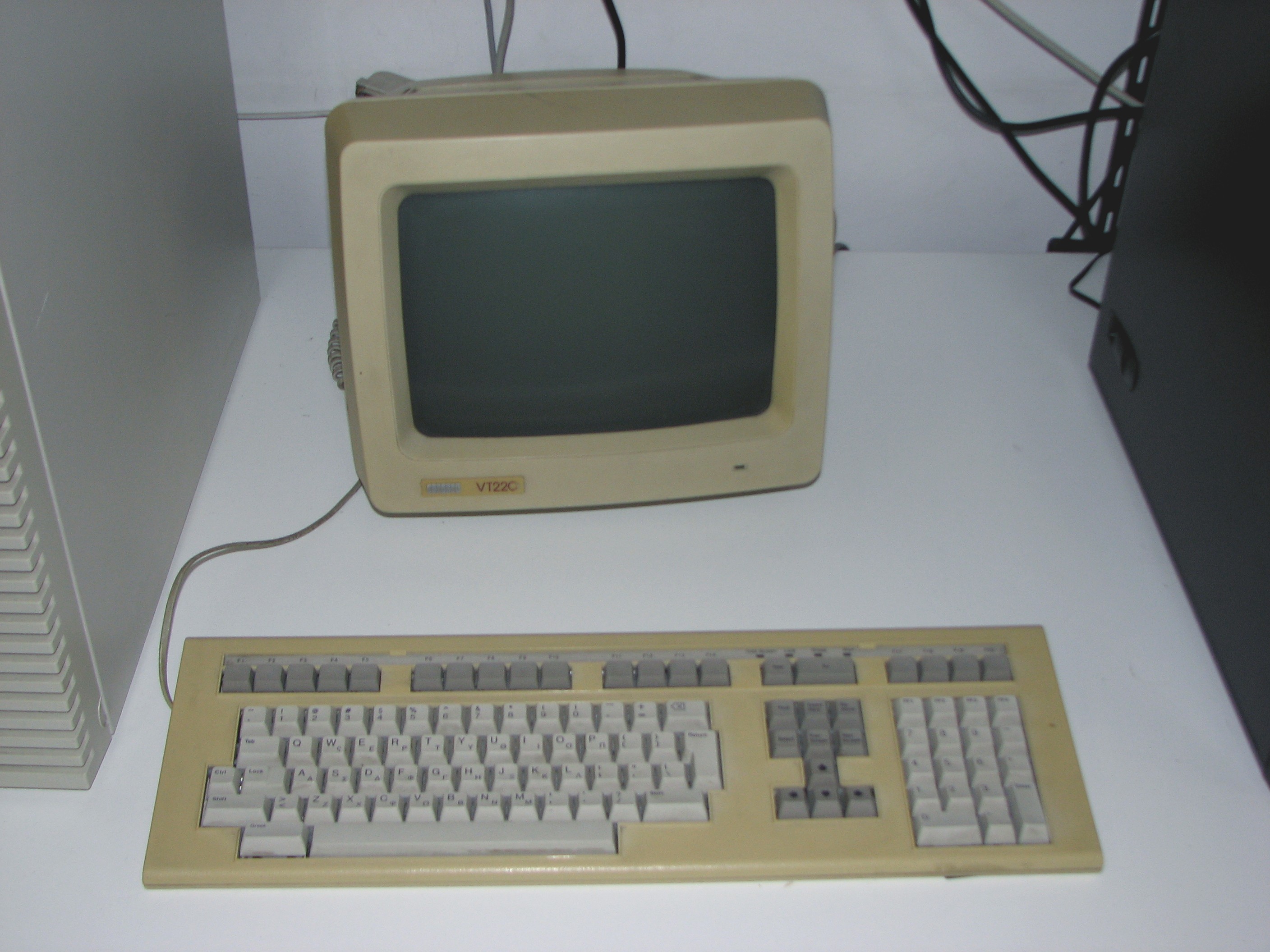 Back in the day, I used IRC for chatting with people halfway around the world, and I got hooked on it for a while. Yes, I flirted madly. Yes, I started a long-distance and short-lived relationship over IRC. In general it gave me social fluffiness and a place to blow off steam or to go pretend. And yes, I used to fire it up on a DECTerm in the brand-new computer center at WPI, or on my VT-220 over a 28.8 modem. Don't laugh; it worked.
I thought of IRC as a faster form of communication and a more interactive flavor of email, nothing more. And then I had my "Aha!" moment. I remember sometime in 1990 or '91 during the First Gulf War, someone had set up a channel for updates on the war. Iraq had sent missiles into Israel and my friends and I got a little nervous about the possibility of a draft in the US, so people from all over hopped on to talk about what was happening half a world away. And then someone casually mentioned that he may have to drop because the air raid sirens were going off right now and he had to grab his gas mask and go into his plastic-sealed room until the all clear sounded. I think he typed, "BRB - air raid. Can't type in my gas mask." He was on from Israel to talk about the war. We buried him with questions and got a decent feel for how he perceived the conflict - apparently air raids were no big deal since most of them were false alarms.
 And then it hit me. Someone in the middle of a war zone in the middle of a missile attack could talk instantly with over 300 people scattered across the world. Here's a guy who was actually living what I saw on the news and filed away under, "That's terrible, but it's not really real because anything on TV isn't really real." And I could talk to this guy and get to know him and feel for him - not so much for the Israeli people, but I could I feel for him because I knew him, at least online.
The war suddenly became very personal and it slammed into my brain in that instant of realization. This power to communicate across the planet made the world incredibly tiny, and gave those with enough curiousity the power to circumvent media pre-digestion and get the raw experience from the perspective of someone on the ground. That's power, and that's what the Internet meant to me from that moment on.
I doubt we'll see anything quite so earth-shaking in a game chat channel, but the ability to live vicariously through someone at an event you can't attend is still pretty heady stuff. Live GenCon updates, anyone? *grin*
And Now, 4e At-Will's Web Chat!
@gamefiend opened the chat room up on Wednesday, 18 May 2011 sometime in the late morning - a little over 4 weeks ago. In that time, we've gathered a core group of a couple dozen solid regulars to keep the discussion blissfully troll-minimal, and we've had visits from Wizards of the Coast folks (Hi, @Trevor_WotC!). The Internet makes us a global village - we've got gamers from Ecuador, England, South Africa, and Germany chatting in there every day. We've recently set up a free-form roleplaying area for people wanting to come up with a character and hang out in the Nentir Vale.
One great benefit for me has been asking questions about potentially breaking into the industry as a freelancer. Thanks for talking about your Lost City experience, @SarahDarkmagic! Communicating directly with freelancers, designers, and game publishers has taught me so much about the gaming industry in a very short time. We've had rules discussions, game design discussions, and talks about business decisions. Speaking of which, if you haven't seen @thedandmom's art, go look at it now and then order a commission from her. Thank me later.
And the chat will only gain momentum from here.
 We're having a special guest on Monday, June 13 at 9PM Eastern: Steve Winter from Wizards of the Coast. He's the current editor-in-chief of Dungeon and Dragon magazines. He's been involved with RPGs since the early days, since he's listed as a creator of the Marvel Super Heroes
 system. He served as the editor for Gangbusters
 and Star Frontiers
 , and he used to run the Car Wars
 "Lake Geneva Death Rally" games at Gen Con.
We'll be having a moderated chat with him - send questions to the moderator and they'll be batched up and asked as the chat progresses. It's a great opportunity to get some D&D questions answered direct from a long-time gamer who just happens to be a highly-placed source inside Wizards.
I'm sold. How do I connect to the chat?
If you want to join for the moderated chat or just hang out and see how others play their D&D games, you can point a browser to the web chat page at http://at-will.omnivangelist.net/at-will-webchat. Or if you prefer a more flexible web-based IRC client, you can use mibbit at http://www.mibbit.com, or you can dust off your local IRC client. You want to connect to server 4eatwill.net, channel #4eDnD.
In the end, it's about building community. We gather ourselves, unlimited by geography and improve the hobby one game, one idea, one answer, one person at a time. We collaborate and create. We talk and imaginary reality pours out of us, spun off as blog posts or published products or adventures five times cooler than ones we could make by ourselves. I'm hooked.
Hope to see you there!
IRC and Me: Ancient History
I thought of IRC as a faster form of communication and a more interactive flavor of email, nothing more. And then I had my "Aha!" moment. I remember sometime in 1990 or '91 during the First Gulf War, someone had set up a channel for updates on the war. Iraq had sent missiles into Israel and my friends and I got a little nervous about the possibility of a draft in the US, so people from all over hopped on to talk about what was happening half a world away. And then someone casually mentioned that he may have to drop because the air raid sirens were going off right now and he had to grab his gas mask and go into his plastic-sealed room until the all clear sounded. I think he typed, "BRB - air raid. Can't type in my gas mask." He was on from Israel to talk about the war. We buried him with questions and got a decent feel for how he perceived the conflict - apparently air raids were no big deal since most of them were false alarms.
The war suddenly became very personal and it slammed into my brain in that instant of realization. This power to communicate across the planet made the world incredibly tiny, and gave those with enough curiousity the power to circumvent media pre-digestion and get the raw experience from the perspective of someone on the ground. That's power, and that's what the Internet meant to me from that moment on.
I doubt we'll see anything quite so earth-shaking in a game chat channel, but the ability to live vicariously through someone at an event you can't attend is still pretty heady stuff. Live GenCon updates, anyone? *grin*
And Now, 4e At-Will's Web Chat!
@gamefiend opened the chat room up on Wednesday, 18 May 2011 sometime in the late morning - a little over 4 weeks ago. In that time, we've gathered a core group of a couple dozen solid regulars to keep the discussion blissfully troll-minimal, and we've had visits from Wizards of the Coast folks (Hi, @Trevor_WotC!). The Internet makes us a global village - we've got gamers from Ecuador, England, South Africa, and Germany chatting in there every day. We've recently set up a free-form roleplaying area for people wanting to come up with a character and hang out in the Nentir Vale.
One great benefit for me has been asking questions about potentially breaking into the industry as a freelancer. Thanks for talking about your Lost City experience, @SarahDarkmagic! Communicating directly with freelancers, designers, and game publishers has taught me so much about the gaming industry in a very short time. We've had rules discussions, game design discussions, and talks about business decisions. Speaking of which, if you haven't seen @thedandmom's art, go look at it now and then order a commission from her. Thank me later.
And the chat will only gain momentum from here.
We're having a special guest on Monday, June 13 at 9PM Eastern: Steve Winter from Wizards of the Coast. He's the current editor-in-chief of Dungeon and Dragon magazines. He's been involved with RPGs since the early days, since he's listed as a creator of the Marvel Super Heroes system. He served as the editor for Gangbusters and Star Frontiers, and he used to run the Car Wars "Lake Geneva Death Rally" games at Gen Con.We'll be having a moderated chat with him - send questions to the moderator and they'll be batched up and asked as the chat progresses. It's a great opportunity to get some D&D questions answered direct from a long-time gamer who just happens to be a highly-placed source inside Wizards.
I'm sold. How do I connect to the chat?
If you want to join for the moderated chat or just hang out and see how others play their D&D games, you can point a browser to the web chat page at http://at-will.omnivangelist.net/at-will-webchat. Or if you prefer a more flexible web-based IRC client, you can use mibbit at http://www.mibbit.com, or you can dust off your local IRC client. You want to connect to server 4eatwill.net, channel #4eDnD.
In the end, it's about building community. We gather ourselves, unlimited by geography and improve the hobby one game, one idea, one answer, one person at a time. We collaborate and create. We talk and imaginary reality pours out of us, spun off as blog posts or published products or adventures five times cooler than ones we could make by ourselves. I'm hooked.
Hope to see you there!
Subscribe to:
Posts (Atom)