Showing posts with label GMing. Show all posts

2026-05-04

Musing About GM Philosophy

I recorded a video about a month ago, representing my first time talking to a camera in literally years. I watched Matt Colville's video about GM Style (see below), and I had a couple of ideas about stylistic axes (the plural of "axis" and not multiple wood chopping tools). Honestly, my ideas speak more to a GM's philosophy rather than style, but there's enough overlap that still feels relevant.


I wanted to mirror Matt's walk-and-talk format, though that's much more of a challenge on a busy stretch of road during the first warm day of the year in late March. Plus I have crappier equipment.

2026-02-02

Loose Game Prep

The Writing Master - painting by Thomas Eakins (MET, 17.173)
Not a self-portrait, but close.

I ran my Fellport D&D game yesterday for the first time since September. Before that, I did some game prep, but I don't know that my game prep is the same as your game prep. So let's talk about it.

I don't like to do "strict" game prep. I think of "strict prep" like prepping for a dungeon. "Room 1 is 30 foot square with 10 foot ceilings, and it contains an orc and a pie." The description is stated as hard facts, and there's very little the characters or the GM can add in the moment. You can bake in some surprises and leave the furnishings vague, but generally the play experience is stiff and not very memorable. It's not great for the party splitting up and wandering an urban landscape, getting into trouble wherever they go.

As a general rule, I do "loose" game prep.

2025-10-16

Do Whatever - Information (Promptober 2025 #15)

It's a frame of 'Chase The Sun' (see source)
Sunset in Cyberspace

Much of a tabletop role-playing game involves the gaining, transfer, uncovering, and restriction of information. Players always need more information about a scene, or where people move during combat, or what a spell does, or what effect keeps them stuck in one place, or where the next piece of the MacGuffin hides. GMs typically hide information until the characters find a way to unlock it, or make up interesting new bits of information on the fly to deepen the players' experiences.

In many ways, information provides the lifeblood of society. If a town can't communicate with its neighbors in a reasonable amount of time, they stand alone against any faster threat that arrives. And if the PCs can't communicate with each other, they each must act independently and waste effort in redundant actions.

Let's stick with the GM/Player dynamic for now.

How can GMs transfer information about the game to players more effectively?

2014-05-30

On the Softer Effects of Sickness

I felt rather like this.
I've been sick this week. Heck, my whole family has been sick this week. This sickness wasn't a hard-hitting cold or 24-hour stomach bug. This thing felt like allergies plus headache, dizziness, and nausea. Just a general malaise more than anything.

Here's the thing: We could function, but we didn't want to function. It felt like and acute case of Ennui, but with a physical cause instead of a purely mental one.

So I started thinking: How do we model this feeling in RPGs?

2014-01-09

A Disney Approach to RPG Experiences

While I was in Orlando over Thanksgiving, I scribbled some notes about how my experience at Disney might apply to running RPGs. Storylines and adventures aside, since I'm sure we already mine fairy tales for story elements, noticing the experience of a Disney theme park made me think about how we as tabletop RPG players and GMs can improve the craft of running games.
"You've got at least
10 levels of dungeon
under that thing..."

Welcoming
Every Disney cast member made sure we had a great time. It was their prime directive, above and beyond their job description, with the possible exception of the guy playing Aladdin who was a fabulous snarky bitch, which entertained me to no end. If we ever looked lost, a cast member approached from less than 10 feet away to ask if they could help. We felt safe and well cared for the entire time. It felt like coming home to a place I'd never been before.

How can we invite more players to our tables beyond simply using "Yes, and..." when dealing with players outside of the game session?

Immediate Feedback
A group of teens ducked under the chain and cut us off in line. A cast member immediately held them back and let us and another family past them, explaining that the chains were there for a reason. You can't get away with much at Disney. There are rules for the good of all, rigorously enforced.

How can we encourage the behaviors we want at the table and discourage behavior that makes others uncomfortable? Is an explicit social contract discussion enough, or do you need a way to safely communicate your discomfort during play (an X Card or safeword)?

"One ringy-dingy..."
Communication
Between the wait times clearly posted at every ride or event, to the mobile app also listing the wait times, to the quick answers to any question, to the frequent announcements whenever there was any problem with the ride, I can't think of a single improvement to Disney's communications. At times we suffered from an overabundance of information, especially the often-repeated announcements during the very few times when a ride stopped temporarily.

Since miscommunication causes frustration, how can we communicate with each other more effectively, both as players and GMs?

Efficiency
For every ride with a wait time posted, we always ended up waiting for less time than posted. Cast members made sure that people churned through the ride at a blinding pace, fixing problems and smoothing out the traffic flow. When buying food, a cast member acted as traffic cop to make sure we got into the shortest line. Longer lines for rides had mini-games and distractions set up so the wait rarely felt like simply waiting. The design of the rides and the cast members removed distractions and allowed us to focus on the star: the ride itself.

How can we limit the distractions of the rules and the outside world to focus everyone's attention on the game? And how can we do this consistently?

"Good grouping."
Found at despair.com.
Consistency of Experience
The whole attraction of Disney rests on everyone having the exact same experience on each ride every time. You can say "I rode the Buzz Lightyear ride at Disney," and everyone who has ever ridden will be right there in the seat beside you as you describe your experience.

RPGs have a hard time with this by design, since they're predicated on letting everyone at the table control the story and the action. Running the exact same scenario at a con for different groups of people will produce wildly varied outcomes. Some think that more specific rules will help enforce consistency, but we can't mandate how a person reacts to the rules in play. Some people may get fed up with the rules and look for a lighter game to play. People play RPGs for different reasons and find different areas that they call "fun".

Should we even try to reconcile this behavior in a quest for more "consistent fun" in our RPGs? Or would that undermine the Tabletop RPG experience, turning it into more of a closed-world computerized RPG?

Sadly, most ride scents were this...
Immersion
Most Disney rides already engage vision and hearing. Disney makes sure they engage touch, like the dark waterfall in Pirates of the Caribbean, and many times smell. I got sprayed or smelled something about half the time when riding. It helped with immersion into the world of the ride, but at times I found the smell aspect annoying.

What tricks and props do you use to control your game space environment when you go for immersion?

Options
Disney provides so many things to do, that there's no way to get through them all in one trip. Some rides are popular, so you have the option of FastPass, which gives you a time window to come back later in the day for priority treatment rather than spending the whole day in line. RPGs have the edge here, since an RPG world can cater to every whim, but a theme park is limited to offering rides, food, and shows.

Were there times in your RPG play experience when you wished you had more options, even something like a fast-forward button to end a combat that the PCs have clearly won? What could you have said or done to make those options available?

Found at Genetic Anomaly.
RPGs and Communication
Tabletop RPGs have person-to-person communication baked into the premise. Can you imagine an RPG where you're not allowed to talk while describing a character's actions? (The caveman LARP comes to mind, actually...)

So why do we have such a hard time communicating about play instead of as part of play?

I hope this post sparks discussion around your game table and improves your RPG experience. These ideas can't make an adventure not suck, but hopefully your overall experience improves.

Thanks for reading!

2013-04-19

Uncertainty and Realization

(NOTE: This morning I was waved off from work because of the manhunt for the Boston Marathon bombers in Watertown. The city is locked down and public transport is stopped. The streets stand empty and the people wait for resolution. We hold our breath.)

It's a two-fer in Dimestore Philosophy Land today!

  1. Uncertainty is worse than catastrophe.
  2. Stress is the struggle to resist reality.

Humans have an odd capacity for worry. Imagination spins current circumstances into unbearable future hobgoblins. We all know they're just vapor, yet we continue to worry and trick ourselves into thinking that the worst will come to pass. We hold on to all possibilities in the name of preparation, consuming our attention from the inside and limiting our lives as we spend more and more energy on spinning possible futures. Even worst case scenarios find ways to become even worse in the fertile playground of our creative brains.

This place of uncertainty within each of us lets the media flourish, spinning their gossamer threads of possibility through the impenetrable wall of the actual future. They look desperately for anyone to support their reported version of reality and their speculation on how the situation du jour will turn out.

Do you dare walk through the gate?
Do you worry about what's
on the other side first?
And when the wave function collapses and the future is made flesh, a part of us feels let down that most of our prep work has been discarded, even as relief or grief washes over us.

The money shot for horror isn't when the monster is revealed, it's when people start figuring out what's going on. Shivers of possibility climb our spines far more effectively than the latest special effects. Transition points in a story contain the most powerful scenes of realization. Transition points don't mean the world changes, they mean the characters have changed their relationship with the world. The trickiest part for an actor isn't reacting to a new circumstance, it's communicating the character's understanding that circumstances have changed and showing the audience the internal struggle to accept or resist this new reality.

What can we learn here? Don't be too explicit when GMing. Leave space for the players to worry. Let them realize what's happening and climb out of the hole their previous ignorance has dug. Let them stew and shiver, and never be afraid to let their apprehension help you tell the next part of their characters' story.

2013-04-12

Fiddly Bits: Rigid & Flexible Design

Where do you tinker with game systems?

I don't want to know where your GM Tower of Solitude is or anything, I want to know where you think the fiddly bits are in your game system of choice. Does your tabletop system have a rigid design with flexibility to create what you need on the fly within the rules? Or does it have a flexible design that encourages you to personalize the rules before or during play?

Let me unpack this a bit.

Flexible Design
Under this idea, the rules are designed to change to fit conditions during play. You can add new spells, new skills, or new classes easily, and in extreme cases you're encouraged to swap out entire systems or subsystems to fit your game or your GMing style. Supplements usually include setting, but they provide new optional rules to support something unique to each setting.

Systems with mainly flexible design include D&D (yes, even 4e, though it's more Rigid that other D&D versions), most OSR RetroClones, RoleMaster, Cyberpunk, Shadowrun, Traveller, and GURPS. What else comes to mind?

Rigid Design
Under this idea, the rules do not change and everyone is expected to follow the rules to the letter. However, the system creates space so the endless flexibility in RPG play happens within the rules and not by changing the rules. House rules may exist, but they're few and far between since the base system provides all the flexibility you need. Supplements may exist, but they tend more toward setting elements (Fiasco Playsets, for instance) rather than additional rules. Many rigid design systems have no supplements or extremely limited supplements.

Many modern RPGs fall into this category, including Apocalypse World, Dungeon World, Fiasco, Leverage, Marvel Superheroic Roleplaying, Fate, and Burning Wheel. I know I'm missing systems here.

Walking the Line
The Hero System fits in both camps, I think. The point buy power creation system is a great way to balance very different abilities and very different character styles and have it all work in a single system. The power creation is very Rigid - it contains the way to make anything within itself and it doesn't need much of anything else. However, supplements have come out covering new Skills, new items, new backgrounds, and new Talents. So yeah, the Flexible/Rigid paradigm breaks down in certain cases.

Why Should I Care?
Each design system carries different expectations, specifically around house rules and the role of the GM during play. In a Rigid system, the GM's actions are much more restricted, and in some cases they're even listed for the GM to easily select. In Flexible systems, the GM interprets the rules and can introduce new mechanical systems on the fly. People trying to talk about the GM's role in RPGs need to be aware of what design philosophy they're working from, because the ideas are wildly different. Even what specific words mean or which words are taboo (GM Fiat isn't necessary in a Rigid Design game, and in extreme cases using fiat could break the system) change depending on what design system you choose to represent.

I'm not saying one system is better, nor that the two are totally incompatible, but each design style assumes different things. And to get back to the initial point, each design style offers different places to tinker with the system. Flexible systems expect you to play with the rules themselves, but Rigid systems freeze the rules and allow you extremely wide latitude to create settings and aspects within those rules.

So where and how do you tinker with your game systems?

2012-08-10

On Scaling Monsters

Lately I've heard, "I can't use monsters for more than 5 levels because they stop being a threat to the PCs." I've seen variations on this, but apparently many D&D and other level-based system GMs feel like monsters have an expiration line that reads "use by level 7".

Ceci ne pas un checklist.
Seriously.
As the PCs level up, some fantasy games fall into a monster progression that reads like a Who's Who of the Monster Manual. It starts with Kobolds and Goblins; then mid-humanoids like Orcs, Hobgoblins, and Gnolls; then Ogres and various flavors of Giant; and finally Big Scary Critters like Dragons, Beholders, Mind Flayers, the Tarrasque, and other unique challenges. "We can mop up the remnants of the Orc army, but now you need to hunt down the Githyanki that supply them and figure out their motivations for doing so."

Why?

If you accept the conceit that the PCs are going to get harder to kill as they gain experience, why limit yourself to thinking that the monsters they fight will stay the same, even relatively weak creatures like Goblins and Kobolds? Granted, any army will have a large contingent of unwashed zero-level conscripts regardless of race, but once they survive a few battles, won't they improve their survivability and capabilities?

I'm a big advocate of listening to the game world and learning what it needs. If you do decide to introduce a new race just to provide a new challenge for the PCs, where does that race fit in the game world? Who are they in conflict with and how have they survived this long? And can your players play a member of that race? Do they exist for a reason in the story of your world, or are they an after-market hack job to challenge your PCs?

"The spear's just for show."
*Meteor Swarm*
Why enforce an artificial progression of fantasy critters that don't exist in your world when you can retool a few basic races and power them up to provide higher-level challenges? Why don't other races take a page from the PCs' playbook and create troubleshooting teams? Why aren't there Kobold Archmages? Goblin Grand Druids? Orc Warlords and Warlords-In-Training ? Hobgoblin Monks? Adventuring parties who happen to be non-PC races?

Yes, it will take some work to get usable stats on these leveled-up monsters, but that effort pays off in a more consistent world for your players to explore. Plus, a high-level party will never be sure sure about engaging a small group of humanoids. And that's the way it should be, I think.

"Whaddaya mean the goblin gets a Wish?"

2012-06-28

GM Drunk. Design Sober.

So I just watched this talk by John Cleese on the nature of creativity. It's a half hour, but good stuff.

There's probably a cleaner version of that somewhere, but the subtitles add a certain je ne sais quoi. Some of the ideas in the video are expanded upon in this article at LockerGnome.

Mr. Cleese talks about research into the nature of creativity that tells us creativity is not an innate talent. It's not tied to how educated you are. It's a state of mind where you're not blindly rushing directly toward the completion of a task, but a state of mind where you're open to exploring ideas that you stumble across. It doesn't focus on a specific goal, it looks around and sees everything in the area.

You can develop creativity by inviting it in, by creating an oasis of time and space to block out the day-to-day task completion (Closed Mode) and settling yourself into an almost meditative state where you can grab ideas and run with them.

He talks about Open Mode and Closed Mode and my mind flips into other modes of duality. About being open to the ideas around you and about discarding ideas as irrelevant to your current task. About moving in circles around a topic and about moving in lines to implement a plan. About the darkness of chaos and potential and the beam of light focused on a single goal. About Zero and One. Gathering and Hunting. Female and Male. Yang and Yin. Circles and Lines.

And that made me think of this TED talk about brain scans done on improvisational jazz and freestyle rap artists to see how your brain handles improv. It's sixteen had a half minutes, but fascinating.

With music, you work within a massive linear structure through the musical constructs of meter, scale, harmomy, and rhyme. Improv musicians can fit something spontaneously creative within the confines of that structure. When improvising music, the self-expression, language, and communication areas of the brain engage in addition to all the structural areas that engage when performing memorized music.

Freestylin' RPG
How does this tie to role playing games? Like music, you have a massive linear structure of rules, stats, character classes, combat maneuvers, the nature of magic, and all the optional and home rules that make the game system. And like music, players and GMs need to be creative and fit their ideas within this structure for a really great game. The pace is somewhat slower than rushing to figure out something to do in the next four bars, but I think the concept holds.

Getting back to the John Cleese talk, to be a great improvisational GM you need to be able to speedshift between Open and Closed Modes. To take the ideas that come up at the table and flesh them out within the rules to present the next thing that happens in the story. To be quick enough to paint the next scene for the players when they take that sudden left and dive off the edge of the map. To brainstorm ideas and implement them in the same breath. It takes effort that engages more of the brain than just running a pre-written adventure, and that explains why I'm usually both tired and buzzed after GMing a good session.

Getting to Open Mode
This begs the question, "How can I switch into the Open Mode quickly?", and there's no simple answer to that. How do you prepare yourself to run a game? I don't just mean prepping the pieces of the game; I mean how do you get yourself in the right frame of mind to take curve balls from the players and react intelligently?

One idea comes from the brain scan video. When improvising, the self-monitoring part of the brain disengages to let the new ideas to come out without inhibition. With this in mind, Hemingway gives us one way to think about avoiding the inner editor and letting the ideas flow: "Write drunk. Edit sober." He was talking about getting past writer's block, so GMs can think of it as, "GM drunk. Design sober."

I'm not advocating that you run your games drunk, but if it works for you I'm not going to tell you to stop it either.

Do I have a point? Yes.
Give up some control and you'll improvise better.

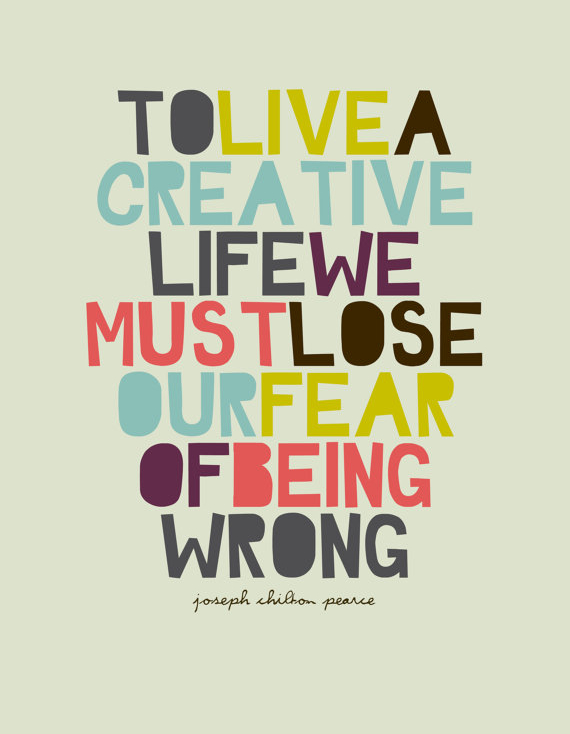
You don't need to be right, especially not the first time. You don't need to fear being wrong because you learn from things that aren't perfect. Remember it's not your game alone, it belongs to everyone at the table. So let the ideas come out without stopping them. Communicate your ideas and let your players change them. Tap into the Open Mode circular way of playing with new things, and don't discard ideas before you give them voice just because the Closed Mode tells you they don't fit with the current line in the game.

Challenge yourself to use one idea as soon as it comes up at the table, preferably one that you didn't come up with. Before long, it'll become a habit and you'll be able to roll with anything that comes up at your table.

Good luck out there.

2012-05-22

Wish Fulfillment

My RPG editor business card, the
handmade dubstep remix version.
Does it work too well? *grin*
So I got my wish. I have a pile of gaming work on my plate, and a decent side income to show for it. Unfortunately, that means less time to spend shaping electrons around my thoughts in here. The Artist Spotlight series won't be published for the foreseeable future, but I want to post article at least every other week. I've got a rush job deadline in early June, so hopefully I can carve out some time for myself after that and before our vacation times this summer.

How can I employ the lessons learned from this situation in my game?

Give 'Em What They Want
Back when I feared psychologically scarring my daughter for life (I've since accepted my part in the inevitable scarring process regardless of my choices), I did a fair amount of reading about parenthood. Most of it spoke about common sense and trusting your gut to know what works for your child. One article that stuck with me documented a simple experiment: Set aside a day and saying yes to everything your child asks for. No permanent damage done, and you both may find some learning experiences along the way. Cake for breakfast? Yes! Go to the park? Yes! Colonize the moon? We can't, honey, but if we could do it in a day, yes! Make daddy's head explode from having a kick-ass time? YES!

Wait. Limited Wish in 4e only grants
a buff for one encounter? Lame.
If it works for raising children, why not give your players exactly what they wish for in your game? Sure, it may unbalance things a little in the short run, but you can use several unseen consequences of their actions to shape the future of your game. Great GMing has been described as fulfilling your players' wishes in a way that they don't expect. So give them what they want, but make sure they feel some pressure from a new direction so you can spin an ongoing adventure from the fallout of their wishes.

This ties back to The Windfall Game that I mentioned in The 3 Types of Loot back in December, where a first-level party managed to recover a huge pile of money from their first adventure. That party wanted wealth, and they got it in spades. They thought it would solve many problems and let them outfit themselves much better. Unfortunately, they became the targets of thieves, and they caught the eye of high-ranking movers and shakers far before they could handle the attention and stand on their own. And that made a great campaign as they struggled with feelings of inadequacy and "this challenge is a little above our pay grade" fear while figuring out how to survive the next challenge.

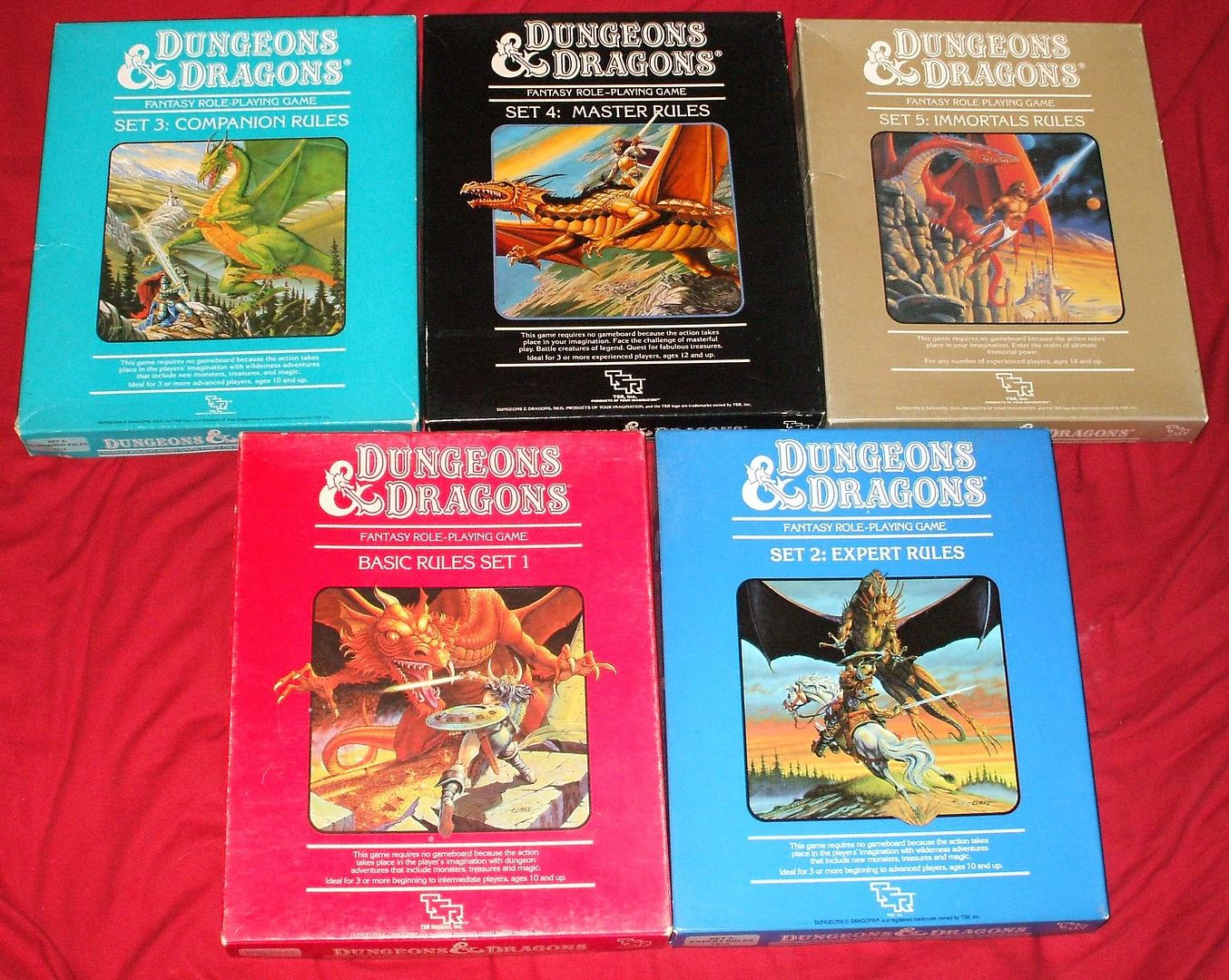
With BECMI, changing the game
was baked into the level structure.
Changing the Game
When your PCs master one area of your game, like defeating any combination of monsters you can throw at them in two rounds or getting filthy rich, then you have a choice. You can continue to ramp up the power level on your existing game style until something breaks, or you can change the game and challenge everyone at the table with something different. I've had luck with changing the focus of the game from a dungeon crawl to a political game in the king's court. I've noticed as the players hit the transition point between mastering the old arena and playing in the new one, they usually fumble badly as they try to figure out the new rules for their characters.

Those fumbles make solid story foundations, as your players will carry the memory of that humiliation with them until they can exact their revenge. Once they finally figure out what's happening in the power game and how the weaselly adviser to the king used them as pawns, your players are hooked on making him pay for what he did to them. They'll put all of their gaming effort toward that one goal, and when the Grand Revenge Plan finally reaches its conclusion, everyone smiles with satisfaction at a job well done and a game well run.

Feelings of satisfaction reward everybody involved for changing the game and buying into the story. Player engagement for the win!

2011-11-15

Schrödinger's Gun GMing: Who'd want to arm a physicist?

Welcome to the introductory article in the Schrödinger's Gun GMing series!

I intend to describe one possible approach to GMing that works for me. Any implication that this method teaches the One True Way To GM is purely in the mind of the reader, as it will not work for everyone. No single method will. I only hope that you find an idea or two that speaks to you and leads you to improve as a GM. Please steal these ideas and use them in your home game. I'd love to hear about how these ideas worked or didn't work for you, so feel free to comment and I promise to respond. If you want to expand on these ideas in your own blog, do so but please link back here.

The Problem: The Grass Is Always Greener...
I'm an improvisational GM more than a planner, so I tend to fly by the seat of my pants when running a game. However, trying to run a long-term plotline in a sandbox environment presents huge challenges. How do you hook together scenes into a cohesive story when you run with an idea a player shared with you five minutes ago?

If you tend to excel with planning and other design-time tasks as a GM, the situation seems even more bleak. What if the characters decide to punt the whole quest and head to the arctic tundra to build an Ice Castle? Sure, you can fall back on your social contract and break the fourth wall. "You see a blinding white plain cris-crossed with a gridwork of blue lines," has worked for me, though it's far from elegant.

How do you get the best of both worlds? How do you make a solid story arc out of short-term improvisational scenes? How do you plan for your players taking a hard right away from your prepared plotline and into Left Field while keeping the arc intact?

Enter Schrödinger. And His Gun.
Let's deconstruct Schrödinger's Gun so we have an idea of what it means. Schrödinger's Gun mashes together two other tropes: Schrödinger's Cat and Chekhov's Gun.

Schrödinger's Cat (TV Tropes link) tells us that anything not directly observed exists in a weird "Yes To Everything" state. In the now-classic gedankenexperiment, Schrödinger takes a hypothetical cat and puts it in a hypothetical impermeable box. Then he puts a randomizer in the box that may or may not break a vial of poison to kill the cat, and he seals the box. He posits that the cat is both alive and dead until we open the box to discover in which state the cat actually ends up. Schrödinger doesn't think about the mess in the box that'll need cleaning in either case, but it's a gedankenexperiment with impossibly ideal conditions and thus a forgiveable oversight.

In gaming, you will have an infinite number of outcomes in your hypothetical box, all equally and absolutely true, but none of them become real until the PCs experience one of those outcomes. The glory of playing an RPG happens when the game future has no strings attached. Everything is possible, but nothing becomes real until it happens during the course of the game and adds to the PCs' story.

In short: Observation and experience define reality.

Chekhov's Gun (TV Tropes link) tells us that once an element enters reality it needs to be used. If Chekhov wrote a stage direction referencing a gun on stage in Act I, he would make sure to fire it before the end of the play. In my mind, you don't need to actually fire the gun, but you must use it in some way - as a threat, as a flashback story, as a crutch making a literal Swords to Plowshares story, whatever. This trope snuggles closely with foreshadowing as seen and overdone in many mystery TV shows today - the insignificant character introduced early on gets unmasked as the mastermind behind the whole crime at the end of the show. I think Chekhov meant it as "don't include unnecessary elements in your story," but the interpretation has gotten more liberal over time.
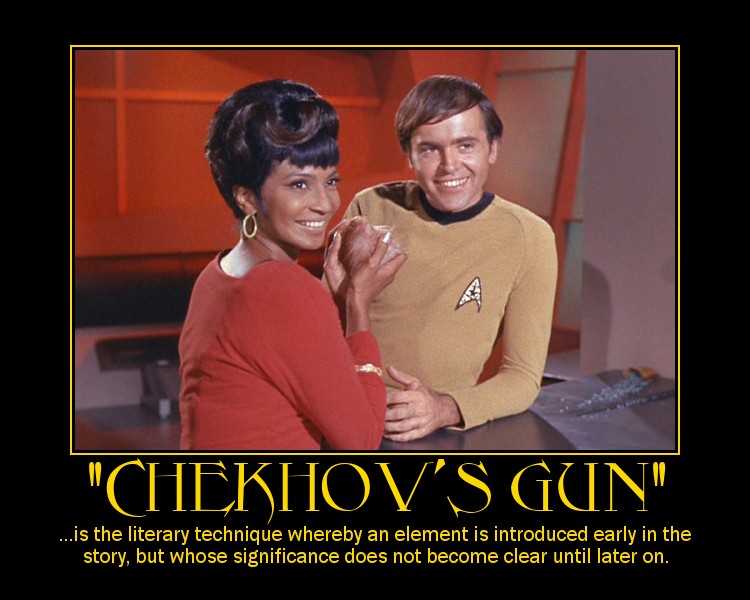
In game terms, when something enters your story it needs to mean something at some point. A nameless NPC who gives false directions when the PCs first arrive in town could be the head of the local Thieves' Guild. Or an insane priest who survived the Catacombs of Madness and snapped at the loss of everyone else in his party. Or she could control the trade caravans in and out of town and the party needs to deal with her to get work as caravan guards. Or she's very well connected and tweets out that there's fresh blood in the compound so every hustler puts a target on the party.

In short: No detail remains insignificant or irrelevant for long.

The Theory Behind Schrödinger's Gun
In mashing these two concepts together, you can change the meaning of anything unrevealed to the PCs to alter or support the story. The faceless NPC demonstrates this beautifully. You introduce someone to give directions. The party treats that person poorly. Later the party needs something from the town, but you decide to complicate their lives by "promoting" the nameless NPC to the head of the town guard who happened to be off duty when the party arrived. No harm, no foul, just a nice twist for the PCs to deal with at a cost of merely updating your notes about the town. The nameless NPC was just an extra until you decided to change that person and use the previous interaction with the party to add something significant to the story.

Once the PCs experience something, you can't change it or you drift into retcon territory. You can change why it happened or how it happened or what a person does for a living if the PCs haven't discovered that information yet, but once something is revealed it needs to impact the story in some way. Not all impacts need to shake the foundation of your campaign, but it needs to mean something to the party.

Schrödinger's Gun has been called RailSchroding because of the ability to make the story go where you want through behind-the-scenes manipulation and alteration of unknown information. The classic case of this takes the main plot and has it follow the party to pop up as a result of any crazy choice they make. There's only so much you can get away with by claiming "It's destiny," and sometimes the players need a break, especially if your main plot threatens the world in a deadly serious way. I'll try to steer clear of situations like this, but RailSchroding can rear its ugly head using this approach. Avoiding it requires some GM attitude adjustment, which I'll cover in a future article.

In short: You can't change what the party knows, but you can change anything the party hasn't experienced or discovered yet.

Why Call This Thing Schrödinger's Gun?
Over a year ago, I read The Angry DM's series of articles about Project Slaughterhouse. If you haven't read it, Project Slaughterhouse sits between encounter design and campaign design, and gives you a way to deal off as many encounters as you need in a specific environment, then allow you to change the character of the environment when the virtual encounter deck runs out. So if you're fighting kobolds in the sewers, sooner or later you're going to run out of kobolds to fight and something else will move in to fill the void they left. It's a very cool approach designed for use in a city or other contained area with several zones containing factions vying for control of the area. And it totally rocks as an environmental management tool. But can it be adapted to function as a story management tool?

In Project Slaughterhouse Angry refers to Schrödinger's Gun, and the concept and name completely stuck with me. I asked for permission to expand on his ideas and use the name. He told me that he got it from TV Tropes and to feel free to use it. I hope to do well by him, even if I'm not explicitly designing a way to pull off a TPK every game session.

I'll also adapt and extend the idea of the 5x5 Design Method created by DaveTheGame to provide a framework for story elements. There may be other ideas and methods out there that fit well with Schrödinger's Gun GMing, and I'll refer/link to them as they come up in context. I may end up doing a link page/bibliography as well.

If I can borrow a shoulder from giants such as these, I think we'll end up with a decent system.

The Bottom Line
Here's the thing: a GM requires a certain amount of grey area to operate effectively. If every detail has been defined and prepared in advance, a computer would do a better job of adjudicating the game because a flesh-and-blood GM would spend every session looking up details. If you start with a blank slate, you'll need to invest so much work into creating your baseline game that you won't have the time or clarity to create deep story lines - story depth takes time to layer events and a story that reaches back into your game world's history to really pull off. There's a middle ground that will let a GM prepare to improvise and create a great game using a balanced approach. That's where I want Schrödinger's Gun GMing to live and thrive.

I hope this introduction has whet your appetite for more details about Schrödinger's Gun GMing. Please stay tuned for ideas you can actually use in play. And if you have a question about how to apply Schrödinger's Gun, get in touch, and if you're willing I'll use your situation as a case study in a future article.

Thanks for reading!

Go to the Schrödinger's Gun GMing Cover Page.

2011-10-19

Lessons from My First Time GMing

I remember being a mostly solitary kid. Alternating school years between my mother and father didn't leave me a whole lot of room to build a social group in elementary school. I got my first D&D Basic set in 1981 and I devoured it. I wrote up characters and started running them through adventures by myself. I memorized the rules by running games for myself.

I managed to talk my father into trying D&D. He rolled up a first level Thief and kitted himself out. I dusted off the Keep of the Borderlands, since I had run my own characters through the Caves of Chaos a few times. I had these grand visions of how the adventure would run. He'd start exploring and get into fights, then I'd have to figure out how to get him healed when he started getting hit, but he'd have all this treasure to sell back at the keep. I knew the rules, I knew the adventure - what could possibly go wrong?

My father subscribed to Games Magazine. Sometimes he fell asleep while working on the World's Most Ornery Crossword Puzzle with the hard clues. We played chess, though I think at that point I had played him to a draw after which we never played again. He seemed to like games, though my board game collection was at my mother's place. So I figured D&D would be a good fit for us.

Running (Ruining?) My First Game
Dad's Thief was ready to go, and we started. I decided to jump to the meat of the adventure and started describing the entry to the valley containing the Caves of Chaos. Dad interrupted me with a question. I don't remember the exact conversation, but it went a little something like this.

"Why am I here?" he asked.

"What do you mean?"

"I mean what's my motivation? Why did I decide to come to explore these caves?"

That one I knew. "You heard rumors about treasure being held by the monsters here. You're a Thief and want to get rich."

"But if I'm a Thief, why wouldn't I wait for others to explore the cave and then ambush them to take the treasure after they did the hard part of fighting the monsters?"

My 12 year old brain wasn't ready for this line of questioning. "Because you're an adventurer. Adventurers wouldn't do that. Adventurers fight monsters and take their treasure."

I don't remember the rest of the adventure, as I was too busy fretting over the fact that he didn't understand or like the game. I felt sad and a little hurt. Here I thought that we'd have this grand adventure and it'd be so fun and we'd laugh and he'd want to play again and this would be the start of something really cool. I already loved the game, but he apparently didn't want to play, so he started challenging what we were playing before we even started. What the heck?

Granted, most of those reactions were new hormones in a 12 year old brain firing whatever emotional neurons they could trigger, but the hurt stuck with me. I thought he didn't like the game I ran and we never played again.

So, my first GMing experience involved strapping my father to the tracks and railroading him toward the game I wanted to play leading to almost-certain death for his character. Not my proudest moment, but it taught me two very important lessons.

Lesson The First: Always Provide A Path To "Why?"
The fact that he asked "Why am I here?" before even playing brought home the idea of hooking a character into a setting. Sure, you can play in a box far removed from everything else, but that's not going to give you the kind of immersion that is the bread and butter of role playing.

Other games answer "Why?" with "Because it's in the rules." Case closed. D&D and other RPGs invite everyone playing to challenge everything. All the rules are guidelines, so feel free to tweak the rules to make whatever you want to play come to life.

"Why?" is a great communication tool and story generator. It tells you exactly what your player is interested in exploring, and if you don't have a good answer either because it's not germane to the plot or you don't know yet, you can always turn it around on a player and start collaborating on elements of the game world. These explorations can be the most powerful in the game because you and your player are both invested in creating your world.

My 12 year old self saw "Why?" as a challenge to its authority and turtled up. My vastly more experienced GM self can look back and see a missed opportunity to explore the character and make a personalized adventure out of the most-often-run module on the planet. I thought I was doing us a favor by skipping the town and jumping to the adventure. I thought that fighting monsters by rolling dice sat at the heart of D&D. To a certain extent that's true, but the bigger and more important part of role playing involves inhabiting a character and telling a story. If I don't allow for a story to develop and work to make it interesting, I might as well play chess instead of D&D.

Lesson The Second: Make Sure Everyone Is Playing The Same Game
Yes, it's about the social contract. I wanted to run an adventure about fighting orcs and getting treasure and show my dad what a cool game this was because you could do anything. He wanted to talk about his character and play a more subtle game involving plotting and getting away with Grand Theft Treasure. We were expecting different games when we started playing. And we never figured out how to talk through it and play the same game.

That's why taking the time and figuring out the kind of game everybody wants to play is so important. Without unanimous support of that decision everybody at the table will be playing a different game, and eventually someone will get disillusioned with the whole process and walk away.

Having the conversation can be as easy as talking about house rules, or it can get into setting and style of play, or you can start with "I don't know how this is going to turn out, so if you're uncomfortable at any time please let me know so we can change things." There is no right way to have a conversation about a social contract, as long as everybody is clear on where the "Too Far" line is so nobody crosses it and starts hurting feelings.

Back in 1981, I had zero idea about social contracts. 30 years later I think I've found a secret to good GMing: leave your expectations at the door when you sit down at the table. Let the game go where everybody wants it to, not just you. Sure, you can end up leading a rebellion against a lich instead of fighting the dragon for money, but if everybody has fun what's the harm? More on this in future posts, I'm sure.

These aren't novel concepts, but they were to me 30 years ago. If my experience can get you to GM better than you are today, I'm happy.

I still have a distant relationship with my father. Our paths diverged, mine for sanity's sake in high school and his because he changed so much for the better but he's still ashamed of what he was. And as I look forward to gaming with my daughter, I have some guidelines that I can use to steer our relationship to a much better place. Role playing will be a much different experience with her, and I just can't wait.

In related news, I'll be starting to run games for at least one group of kids soon. Starting to work through details now. More as it happens.

2011-08-20

Adris: House Rules for D&D 3.x

I'm not sure I ever wrote up anything about house rules beyond a few bullet points in an email, and there are a few rules I'd like to share. Details follow, so read on if you're interested. Better late than never, I suppose...

Character Creation
Stats generation for characters uses my standard roll of 4d6 and drop the lowest die unless it's a 1, then assign as you see fit. Yes, that means you can roll a 19 in a stat with three sixes and a one, and you average slightly higher stats than normal. It's not a huge imbalance, especially given the overclocked power level the party has earned over the years.

Masters of the Wild: A Guidebook to Barbarians, Druids, and Rangers (Dungeon & Dragons d20 3.0 Fantasy Roleplaying Accessory)I punted supplements in general after the mass of splatbooks started feeling like an arms race, and I eventually ran the game almost entirely from the System Reference Document. I was so trendy, I had the entire SRD available on my Palm - if only the search time was faster... Since I used the SRD, prestige classes didn't come up often at all, though I used the Assassin class to death when updating The Assassin's Knot. I'd rather stick with a base class and model your idea of your character's abilities using feats, swapping class abilities, and outright adding cool stuff. I've tried to be consistent over the years, and I hope I managed to pull off at least a workable balance.

Quirks and Flaws
Everybody got a chance to pick a drawback or quirk in exchange for a little power boost that made sense. Wulfgar latched on to hydrophobia and eventually got paid back with weapon bonding to his axe that gains power as he levels. Asalia took "locked up by her father which caused some psychological issues" and got paid in wonderful role-playing opportunities. Pandora's quirk was her compulsion to make Trail Mix (now with Real Trail!). She'd make a batch in the morning out of whatever ingredients were handy, then roll a d20 to determine roughly if it was good or bad. Anyone eating the Trail Mix rolls a Fortitude save and has something minor happen - usually a +/-1 to a stat or a save, and possibly dry heaves. Given the fickle dice at the table, Wulfgar eventually swore it off since the Dwarven Fighter couldn't make a Fortitude save to choke the stuff down.

Character quirks give you hooks to make play more interesting, and I highly recommend using them for any character.

Detection Effects
When starting out with a Paladin in the party, I needed to get a handle on "Paladin Radar", otherwise know as the Detect Evil ability. I made a couple of changes which seemed to work out pretty well. First, Janik's eyes would burst into flames when he used it, so everyone around him knew every time it went active. Second, I changed it to Detect Motivation to introduce some grayness to play in.

I wanted to give more detail than a simple "it's evil so you can kill it" answer to handle situations like a good person doing evil things to save their family. I wanted the character to make the call, not me acting as their higher power. So I let Janik see into people's hearts and get an impression of a person's motivations rather than just see the taint of evil. I think it worked out really well, and Janik still got to use his Paladin Radar to chase down goblins in the middle of a blizzard caused by a white dragon.

Upgrading to 3.5, or "The Magic Ty-D-Bol"
Dungeon Master's Guide: Core Rulebook II v. 3.5 (Dungeons & Dragons d20 System)Wizards had the unmitigated audacity to upgrade the rules to 3.5 while the campaign was running. It smoothed over some rough patches in 3.0 and added some things I liked, so I decided we should probably switch over. But the spell nerfing in 3.5 needed to be explained in the context of the game world, so I made an adventure out of it.

The party discovered that the drow were doing something magical and nasty. They decided to investigate. Eventually they found a room filled with a swirling vortex of arcane energy being attended by several drow wizards. It seemed to be sucking the magic out of the surface world and storing it in the Underdark for later drow use. The party immediately dubbed the vortex "The Magic Ty-D-Bol", and it stuck from that moment on. Since most of the party cast spells, this vortex simply would not do. True to form, Asalia tied a rope around herself and flung herself into it to disrupt the ritual. It worked, but not before the nature of magic changed and reality along with it.

Voila! New rules implemented with an in-game reason to make the change. It satisfied me immensely. I don't think I can pull the same trick with an upgrade to 4E - the structure of the rules has changed a little too much to do it without recreating the characters from scratch. We'll finish it out in 3.5 and move on from there.

Runecraft
As a Priest of Odin, Thorolf could use runes. He could easily cast and read runes as an impromptu Augury effect once a day. In some cases we actually pulled and interpreted runes during the course of play. My jaw dropped at how well the random pulls actually fit the situation and the question every single time.

He could also scribe runes to enchant items for specific purposes. The permanence of the item depended on the materials he had to work with. A simple Alarm spell for a night could be scribed on the wall with chalk, but if you wanted that flaming spear to last more than a single hit you should probably invest the money and rework the spearhead to hold the runes permanently. He had a pool of uses per day which he could use to power effects, including permanent items. Eventually he could wean the permanent items, but he would be down a few slots while the enchantment took hold.

I modeled this ability by creating a Runecraft feat which gave access to the Int-based Runecraft skill. He'd need to make a skill check any time he wanted to kick off a power or enchant an item or create his boat. It fit easily into the existing system, and I could dovetail runecraft uses into the item creation rules with no problem at all. I typed it up, and I probably should have submitted it to Dragon at some point. I didn't, and someone else published a take on runecraft for 3.5 in Dragon. C'est la vie.

Ignoring Spell Failure, Swapping Elements, and Other Options
G123 Against the GiantsI introduced Spellswords into the game when they rescued a Rugathi Spellsword from the Steading of the Hill Giant Chief. Rugathi are also known as Red Elves. They only live about 200 years because they don't need to sleep, trance or rest at all. The Spellsword trained Wulfgar on working spells while wearing armor and tying a spell to a weapon so it would detonate on a melee hit. Both manifested as feats.

Early on the party investigated a summoner's tower that blew up just oustide Adris. They discovered mephits guarding his underground complex, some mad, some reasonable. They managed to Dismiss most of them, and they even met up with Icy and Steamy much later on in the game. It took some time, but they deciphered some notes and found a metamagic feat that would let spellcasters swap elemental effects on the fly for +1 level. I allowed swapping in Force effects for +2 levels since there's no Resistance to Force anywhere. Did your sorcerer learn Fireball, but you're headed to the Plane of Fire? No problem! Cast it as a 4th level spell and make it an Iceball, or maybe a 5th level Forceball.

Parting Shots
Generally, I think I'm pretty flexible as a GM. I believe that the rules should support the game and not limit it. If you want your character to have an ability, let me know and we'll work something out.

I'm still going through the pile of loose notes, the box and a half of home-printed index cards, and the two notebooks to get up to speed on Adris and The Bickering Eight. I'm sure I've hacked the rules in a few other places. If so, it'll come out in future posts.

Thanks for reading!

2011-06-30

A D&D Pipe Dream

Reading @SarahDarkmagic's latest post, named Recently Initiated Loud Mouth, made me think of the pipe dream I had after Unearthed Arcana came out for D&D 3.5e. So instead of rambling on in a comment over there, I'll clutter up my own corner of the 'Net with it. Yes, it will require some work. Yes, it will be a different approach to D&D, and it may well be unpopular. But I'll tell you anyway because I like you.

Personalized Rulesets.

Unearthed Arcana (Dungeons & Dragons d20 3.5 Fantasy Roleplaying)Centralize and digitize the rules, then let GMs pick the rules they want to include in their games. No elves? No problem! Uncheck the box and they're gone. Want inherent bonuses to avoid the magic item glut? Click and done. Alternate hit point and healing rules? You've got 3 options, go crazy. After the GM is done selecting rules, an email goes out to the players with a link to the character builder pre-loaded with campaign-specific options and ready to print or save as a file to use on other campaign-planning sites. Also, the GM can download a PDF of the hyperlink-riddled Rules Handbook for that particular campaign, complete with simple personalization like the campaign name in the header of each page.

As new rules come out, add them to the list of options, but they won't change any existing Rules Handbooks. You could offer "pre-set" rule choices so if you wanted a bare-bones Starter Box game or a Dark Sun game, one click would get you the rules as written which you could then customize. You could even extend this idea to allow sections of user-generated house rules inserted into specific locations within the PDF. If the author wishes to share his house rules with specific fellow GMs or even with the whole community, that's as easy as clicking a button.

For the publisher, this gives incredible insight into what rules and settings are popular, and so what products would be well received. For an enthusiastic fan base who create House Rules, the community can "vote up" a particular house rule by using it in their campaign. The publisher would have access to the house rule usage stats and provide a convenient stable of new rules and content authors. The publisher could approach the author of the house rule to develop the rule further to make it an official rules option through the rules site or develop it as a full-blown adventure or setting supplement.

Official Advanced Dungeons and Dragons, Unearthed ArcanaTruth be told, I'm a systems guy. I love tinkering with how the world operates and then turning the players loose to figure out how the world works. I view rulesets as toolboxes, as ways to express the stories and scenes I have in my head. This approach would be the ultimate toolbox. You could cover the gamut from extremely rules-light Blue Book D&D to really crunchy settings like Birthright or Dark Sun with a click and a printout.

Further, it moves the rules from static book form to a digital format from the ground up. Integration with tablets and smartphones would be easy with a smart enough API. Granted, no core rulebooks other than the Rules Handbooks the GM prints means no aftermarket for used core products, which makes me a little sad. But I think the freedom granted to GMs more than makes up for it.

What do you think about this approach? Too radical? Too practical? Like it? Hate it? Do you want your five minutes back?

2011-06-24

Teaching GM Skills: The Roughest of Outlines

Thursday afternoon in the At-Will Webchat, @gamefiend asked the question, "What skills would you need to be a great GM?" The room talked and debated, focusing on what skills we can teach in some sort of "How to GM" educational course. The discussion fed into my pipe dream of some sort of GM Academy or at least a certification, but that's a topic for a different day.

Some of us focused on scope, and yes, there is a big difference between GMing a one-shot at a con with newbie players and an extended campaign at home with friends. Some focused on finding the simplest core of GMing: debatably rules arbiter, master of surprise (story or dice), and pacing/spotlight director. Some spun off into a discussion about psychoanalysis and escapism. It was glorious. The thoughts swirling around the room made it hard to keep up on my tiny phone screen, but the effort was well worth it.

Since then, I've been stewing on it and trying to come up with the skills I'd teach. Not all skills are applicable in all situations, but I'd rather err on the side of overfilling the GM's toolbox rather than risking neglecting a technique that will save a GM's bacon in a specific circumstance. I was hoping to write up a little on each, but then the outline kept expanding.

So I'll leave it in your capable hands. Here's the outline that I threw together. What's missing? What topics would you like to see explored in-depth? What topics do you already have resources for and would you be willing to share them in the comments?

The Outline-In-Progress
The Big Picture
- Overall Goals. How do I GM? What's the point? What core ideas do I take into a game? How do I know if I'm doing well? Separating design-time from run-time.
- Which came first, the game or the social relationship? Shared language and depth of trust at the gaming table. Start talking about Social Contract, since it's important enough to cover twice.
- What does GMing mean? Thinking on different levels (Campaign, Adventure, getting in NPC's heads, tactical adventure decisions). Allowing different levels of player control.
- Scope: One-shots vs. ongoing campaigns. Different skills needed for each scope.

The Rules
- Intro: Player-level learning. Easiest skillset to master. WILL NOT cover looking at actual rulesets. What rules do you need to learn? PLAY THE SYSTEM, or at least mock up something to run through yourself so you can see how the system works.
- Styles of rules: Simulationist vs. Narrativist vs. Gameist. Different expectations and emphasis on play.
- Styles of mechanics: Narrativist "roll for scene resolution" vs. Sim "Roll each hit in combat". Maybe a little deeper, like dice pools vs. d20-style to-hit and damage rolls?
- Figuring the point of play. What player actions receive rewards under the rules?
- Two types of rules: Conflict (X vs. Y: who wins?), and spotlight control (building scenes and creating stuff in-world). Go for the awesome and only roll when it forwards the story.
- Extend discussion to how to improv within the rules. Where's the wiggle room? Where can you tweak, and do you need to?
- Extend discussion to world design - How do rules and abilities impact social standards? If everyone can cast magic missile at will, what changes vs. Vancian magic?

The Story ("Advanced" - Campaign/adventure design: mostly not applicable for canned one-shots)
- Act and Scene structure - Story Arc and Adventure contexts - overlaps with "pacing" below.
- Surprises and Preparing for sudden turns.
- Making structures to support improvisation - Don't be afraid to go off-script. An adventure ain't sacrosanct. Prepping your GM Toolbox with scenes and side plots.
- Keeping track of Run-Time decisions vs. Design-time plotting. How to manage your campaign.

The Game
- The Social Contract - setting expectations and making sure everyone is rowing in the same direction.
- Sensitivity training - Listening to your players and preventing issues. Study Robin Laws's player types. Make your game awesome by giving your players what they want in a way they don't expect.
- Communication is king! Make sure you back and forth with your players. Exposition sucks.
- Nailing descriptions and characterization. Sometimes less is more.
- Improvisational Techniques. More GM Toolbox topics. How do I keep up when the players go off the rails?
- Controlling the Pace of the game.


I think that's a good starting place for discussion, though I can spin off and add to this list 'til the cows come home. I tried to boil it down to big topics, but there are so many specific and important skills that beg for attention.

What do you think? What did I miss? What did I include that doesn't make sense to you?

2011-06-17

Thinking About Adventure Design

On the train home last night, I hopped on the At-Will Chat. Jeff (that's @Squach for you playing along on Twitter) was working through some ideas about his epic-level 4e game. It involved a ghost temple and killing or absorbing the last remnant of a god, and that's as much as I'll say to prevent really cool spoilers. A handful of us in the chat floated some ideas and talked about how cool it sounded.

Then the chat turned a little more abstract. Someone said that hearing very cool campaign ideas made him feel inadequate as a GM for having only mediocre ideas. At which point we spun off into expounding on the nature of awesomeness and the glory of idea-mashing.

On Awesomeness
We want our games to be awesome at all levels, but as I said yesterday, "Epic tier should be crazy awesome." Great! What the heck does crazy awesome mean?

We talked about the 4e tier structure (Heroic, Paragon, and Epic) and some ideas about the power level context at each tier. And there can be no consensus on what to include at each tier. One person may create an awesome Epic adventure around clearing the city sewers of abominations. Another person may dabble in the affairs of gods, possibly usurping power and ascending along the way. Someone else may go social and have Epic characters portray a diplomatic troubleshooting corps in service to a king.

The World and The Rules don't matter as much as the players doing awesome things (The Game).

And here's the very cool and ultimately maddening secret: Awesome is subjective. You can stack the deck in your favor, but at the end of the day you can't get out your Awesome Ruler and chalk up a "10" on the cover of your adventure. You need to get some tools and bits ready when you design your adventure, and you need to pay attention and adapt those ideas during run-time to surpass your players' expectations.

On Idea-Mashing
It's been said that good fiction writing isn't about developing an idea, it's about taking multiple ideas and mashing them together to make something greater than the sum of its parts. The same idea applies to adventure design. And sometimes getting a second set of eyes on your ideas can sharpen the adventure and ramp up the awesome. You are the ultimate arbiter of your world, but that doesn't mean you need to do everything alone. Ask your friends for ideas and see what happens.

For instance, let's say you've got a straightforward dungeon crawl to find the formula for an antidote to restore the king to health. You've got a dungeon set up and populated with various beasties and traps. It's ready to run, but it needs something else to spice it up. You could add more monsters and more interesting traps, but that's like adding more water to the soup - those elements are already in the mix.

So what else can you add? Start playing "What if...?" and see what idea grabs you. What if there's someone who doesn't want the king to be healed? You could put a rival team in the dungeon intent on stopping the PCs. What if there's an internal war between factions or races in the dungeon? Say, the warband leader and the high priest are having a power struggle for the tribe, so there are two factions of goblins in play. What if the king is supposed to die in the divine master plan and an Oracle hidden in the dungeon plants that seed of doubt in the party's collective head? So if they deliver the antidote and the king tries it, the antidote won't work for anyone any more by divine decree, possibly causing a plague.

Think beyond the walls of the dungeon you've created. Everything that happens in the adventure has the potential to impact the party in unexpected ways. Using the ideas above, the PCs can discover the existence of a group of usurpers, or make peace (or declare war) with a faction of goblins who have ties to the Great Horde in the north, or start working directly for the gods as opposed to more secular heads of state. Each of these ideas goes beyond the dungeon, but the first introduction to them lies in a simple Maguffin Hunt.

Your game should allow your players to discover a tapestry of interlaced stories through the eyes of their characters. Even one-shot con games should be like a good movie - wrap the main story up logically, but leave enough questions so the audience wants more.

As always, thanks for reading!

2011-05-06

Framing Conflict in RPGs

In its most basic form, and RPG requires conflict to exist. If you play a game featuring characters content with their lives and unwilling to risk what they've acquired, everyone at the table will be bored to tears by then end of the first game session. RPGs need action and clashing ideologies to bring them to life, so let's talk about conflict.


What Is Conflict?
Conflict is a cool word. It's a noun and a verb, and you can stress either syllable to pronounce it correctly. Versatility aside, the meaning I want to hone in on reads, 
"discord of action, feeling, or effect; antagonism or opposition, as of interests or principles"
Conflict injects chaos into your characters' otherwise-sedate lives. Conflict builds situations for the players to avoid, defuse, or overcome. Conflict lives at the heart of adventure, motivating greatness and inspiring heroes to act. But how can we use conflict more effectively in our games?

As I learned way back in middle school in the early '80s, only four types of literary conflict exist. I've modified the words over the years, but the concepts remain unchanged and very usable in RPGs. Once we understand the types of conflict and where they fit in a game, we can look for less straightforward conflicts and use them to add depth to your game and drive your story to greater heights.

Person vs. Person
Man to Man: Fantasy Combat from GURPSWith most RPGs, the main conflict covered in the rulebooks ultimately boil down to Person vs. Person. This covers combat and skill contests and comprises the meat of most RPG systems. Person vs. Person conflicts drive traditional scenes: they have the Maguffin and I need it so I'm going to devise a way to steal from them / trick them / beat them to a bloody pulp.

I think interpersonal conflicts at the physical level have been covered many times over in many rulebooks, but the social level opens up some new territory. What if you need to recruit allies for a cause? How do you convince someone to join you? Sure, you can model that in a D&Desque skill challenge, but I think "soft" Person vs. Person challenges like this work better without mechanics. I'd love to hear other opinions about rules for resolving social challenges, but every system I've seen leaves something to be desired.

Person vs. Nature
Dark Sun Campaign Setting: A 4th Edition D&D SupplementThese conflicts comprise the "other half" of traditional RPG rules. How do I interact with the environment? How easily can I scale this wall? How long can I survive without water in the Sandy Wastes? You find these questions answered in rulebooks.

But what about at a deeper level? What things can my character never change that will drive the story? My easy answer? Time. Something as simple as introducing some sort of timer to a scene will push it into overdrive as the characters see the deadline crawling ever closer.

Person vs. Nature conflicts also come into play for character backgrounds and characterization exercises. many questions point to Nature conflicts. How is my character tied to the land in which he grew up? What challenges has my character faced in the past and how do those experiences alter his actions today? My favorite expression of this is some sort of natural phobia or curse. Maybe it's never explored in the game, but something bad had to happen to make this brave warrior go fetal when placed in a boat.

Person vs. Society
Serenity Adventures (Serenity Role Playing Game)Another traditional trope, this conflict typically plays itself out through the story rather than the rules. At some point the PCs do something that flies in society's face, and they pay the price. Getting in trouble with the town guard happens more often than you might think, but the fact that the PCs can beat a pile of guards to a bloody pulp while drunk tends to limit the effectiveness of that implementation of Person vs. Society.

Status, renown, and reputation make great motivators for Society conflicts. Social Rank is a stat in Traveller, but I'm not sure we need to create a status score to use status effectively in our stories. Status can feed impossible choices, since doing a favor for one power group often earns you the enmity of a different group. You can't please the entire world, but you'd better be sure to earn some favors with someone who can cover you through bad times.

Person vs. Self
Self-conflict provides hours of roleplaying gold. Setting up some sort of internal conflict expressed through an impossible external choice will hook your players into your game like nothing else. Which prince has the better claim to the throne? Which is more important to me, an innocent child or the stability of a nation? These questions give you insight into the character's mind and soul, exposing them for who they truly are under the trappings of societal roles.

I can't overstate the importance of fostering self-conflict in your game to provide a deeper gaming experience. Phobias [1] and post traumatic stress both fit into this category. Even a quick self-doubt description like, "You don't know if you can beat the champion in the arena" works wonders for giving a scene depth. Once your players latch on to how their characters think and behave, you can dig in and overturn some rocks. If a player comes up with a hangup or something that will bring up unreasonable intense feelings when exposed to a trigger, that's awesome.

One word of caution: talk with your players before springing something intensely personal on them. We're treading into touchy territory, and someone who's not ready for the intensity can have an unexpected reaction and may leave your game entirely. We don't want this, so always take the time to give your players a little metagame heads-up when trying to tap into intense Self conflicts.

How Do I Use Conflict Types?
Conflict types provide some structure to develop your plots. Some conflicts are self-evident; deposing a corrupt duke would have Society conflicts in a more central role. I encourage you to embed different levels of conflict within a straightforward plot. For example, what if the leader of the resistance against the corrupt duke were someone who had betrayed a member of the party? There's a Self conflict that needs to be resolved before the main Society conflict can resolve. What if the duke will issue a banishment edict just as soon as the blizzard passes and the roads are clear? Suddenly you have a race against the clock and a Nature conflict to add some complexity to the main plot.

The Joy of Conflict Resolution: Transforming Victims, Villains and Heroes in the Workplace and at HomeWhen it makes sense, offer a conflict of each type to to each person at your gaming table. Don't be afraid to ask your players for ideas, especially during character creation. If the player comes up with the idea for their conflict, they'll be more likely to play it and keep exploring the depths of what that conflict means to the character. If that happens, you'll need to keep up your end of the bargain and make sure you reference it during play, but that should be an easy choice given the depth that ongoing conflicts add to your game.

Not every game session will feature each conflict type; that's as it should be. Offer a variety and see what your players respond to, then adapt to what your players want. If they continually go back to Society conflicts, you may want to switch gears to more of a cloak and dagger or Robin Hood approach to your game. If they lean toward Nature conflicts, maybe they should explore the wilderness for a while.

Thinking about conflict types provides a template to enable more communication with your players. The feedback you get about which conflicts your players choose will give you insights into what they're looking for from your game. Some "Top Down" GMs like me need mental constructs to add depth and build a better game. Other GMs can make a very complex game with pure instinct and improvisation.

If you manage to get conflicts at each level to come to a head at the same time, then my hat's off to you. I want to hear about how you set up the situation and how it resolved. If you can use conflict types to add more depth to your game and get your players more engaged, then I've earned my keep for today.

As always, thanks for the eyeball tracks!


[1] We already talked about phobias in the Nature conflict section and here it is again in the Self section. Where it fits depends on how you want to resolve the phobia. If it's a personal hang-up, frame it as a Self conflict that the character may eventually resolve on his own. If there's an external reason for it, maybe it can be resolved as a quest. How will the conflict be most interesting for the player to deal with? There are no hard lines between conflict types, which make them infinitely interesting to think about.