It's long past time to close some browser tabs. I've managed to collect a pile of links on the business of RPGs, whether sales numbers, potential printing services, or tips for running your tabletop game business. I've filled the ranks with a few older gems and categorized the whole mess.
Most of the posts are geared toward or about Tabletop RPG publishers, so if you're a freelancer like me you can definitely use those articles as market research.
Please pardon the wall of text - this thing took a while to compile. Enjoy, and feel free to share anything you've read that helps you in your RPG-based business.
(Warning, this post got long. Buckle up.)
On Product Sales
Moebius Adventures publishes their sales numbers fairly religiously, and also ties that together with their blog traffic for a comprehensive view inside a small RPG publishing business. The January 2015 Report talks about the holiday slump and focuses on recovering momentum.
Martin Ralya at Engine Publishing worked up the year-end sales numbers and found they sold over 21,000 units between 2010 and 2014. Releasing one solid product per year over the past 5 years seems to be a solid business plan, but it also requires constant promotion. The industry awards don't hurt either.
Evil Hat Productions compiles and publishes their sales numbers quarterly in terms of units, not dollars. Here are their numbers for Q4 2014.
Lumpley Games gave us a look at 10 years of RPG sales as of 2/28/13. The graphs, analysis of the customer's first purchase, and hard numbers are well worth a look.

Showing posts with label experience. Show all posts
Showing posts with label experience. Show all posts
2013-11-01
On Toxicity and Empowerment
(Writing this challenged me, and I'm a little nervous about publishing it.
Also: No art. Deal.)
I'm currently dealing with some political crap. Yes, it's been consuming and very distracting, and I apologize if I've been out of touch lately. But this experience has made me realize some things that I thought I'd scribble down.
A Tough Spot
If you find yourself in a situation where you feel uncomfortable or anxious, you need to change the situation. Don't just endure it thinking that things will change without your input; if nobody else knows there's a problem, nobody will change what they choose to do and the situation will remain or get worse. Talk with an uninvolved friend to get some perspective. Explaining your situation to someone else will help clarify the problem and let you know you aren't projecting personal dislike into a larger issue.
Enduring unpleasantness will drain your energy and make you feel miserable, perhaps even sick. No wonder situations and people get labelled "Toxic". If you want to improve your situation, you need to speak up. Hoping that something else will fix the problem only teaches you how to be helpless and how to resent others for not reading your mind.
If you want things to change, you have a responsibility to initiate that change.
You Always Have Options
No matter how riled or jangled I may get, nothing calms me down faster than realizing I have choices. It doesn't matter what those choices are; just remembering that choices exist renews my feeling of control over a situation. It may be as simple as "do this one thing later", but at least it's a focus for action.
Take some time to figure out your options. Write them down somewhere private so you can analyze them somewhere outside of your head. Writing out a list of pros and cons for each option helps me. When I identify a worst case outcome and accept it ("I may get fired... Y'know, I'm OK with that."), I feel much less anxious and more free to choose any option when dealing with the issue.
Dealing With People
Talking with the others at the game table is a good first step, but frame the conversation carefully. Accusatory statements that start with second-person absolutes such as "You always..." tend to shut down communication before it starts. Even the most reasonable person can't help circling the wagons when accused. Stick with personal statements like "I feel uncomfortable when I hear..." and invite communication to the table. One-on-one conversations work well, but they can be scary. I failed my players as a GM once when I was too afraid to deal directly with a problem player who made the game much less fun for everyone else at the table. Lesson learned.
If one person's behavior makes you uncomfortable, or if they fly off the handle no matter how gently you broach the topic of your discomfort, get others involved. Something brought you to this group. Remember why you agreed to join and start there. If a friend invited you, then you probably already have an ally at the table. If a store or game club led you to this group, start asking around and see if others have a similar issue with this person.
Eject! Eject!
You always have one option: pull the ripcord. If your role in the gaming group dynamic boils down to "Emotional Punching Bag", GET OUT AS SOON AS POSSIBLE. You may lose friends out of it, but your friends shouldn't hurt you, especially if you've already talked to them about the situation. Don't worry about "it's the only game in town" - that particular fear just means you haven't met the right group of local gamers yet.
You're playing a game. Games should be enjoyable and add positive experiences to your life. If your game keeps you up at night worrying about how others at the table will make you feel, you need to remove yourself from that situation immediately.
If your game keeps you up at night worrying about what mayhem your character will experience in the next game session, it sounds like you're part of an excellent game. I don't think you need help dealing with a toxic group in this case. Also: I'm jealous.
About You
I don't know you, and I don't know your situation. I can't speak directly to what you're going through, so I'm not going to try. You need to set your own tolerance threshold for whatever social mess you're experiencing. Once that line gets crossed, you need to act.
Some people are so selfish that they can't comprehend the pain they cause. These people are not worth your time nor your friendship. You are not responsible for their actions; you are responsible only for your own actions. Protect yourself first, then communicate about the problem from a place of safety, and if nothing changes walk away.
This should go without saying, but if you feel physically threatened or have been hurt, get out as quickly as possible and call the authorities, up to and including the police. Help is out there, but you can't count on help finding you on its own.
Final Thoughts
Gaming should empower everyone. You play the hero. You can enact change on the game world. Changing the world is your job as a player.
Take that attitude back to the real world. You have power. No matter how things play out, never forget that you have the power to change your circumstances.
I hope all your gaming experiences are positive.
Also: No art. Deal.)
I'm currently dealing with some political crap. Yes, it's been consuming and very distracting, and I apologize if I've been out of touch lately. But this experience has made me realize some things that I thought I'd scribble down.
A Tough Spot
If you find yourself in a situation where you feel uncomfortable or anxious, you need to change the situation. Don't just endure it thinking that things will change without your input; if nobody else knows there's a problem, nobody will change what they choose to do and the situation will remain or get worse. Talk with an uninvolved friend to get some perspective. Explaining your situation to someone else will help clarify the problem and let you know you aren't projecting personal dislike into a larger issue.
Enduring unpleasantness will drain your energy and make you feel miserable, perhaps even sick. No wonder situations and people get labelled "Toxic". If you want to improve your situation, you need to speak up. Hoping that something else will fix the problem only teaches you how to be helpless and how to resent others for not reading your mind.
If you want things to change, you have a responsibility to initiate that change.
You Always Have Options
No matter how riled or jangled I may get, nothing calms me down faster than realizing I have choices. It doesn't matter what those choices are; just remembering that choices exist renews my feeling of control over a situation. It may be as simple as "do this one thing later", but at least it's a focus for action.
Take some time to figure out your options. Write them down somewhere private so you can analyze them somewhere outside of your head. Writing out a list of pros and cons for each option helps me. When I identify a worst case outcome and accept it ("I may get fired... Y'know, I'm OK with that."), I feel much less anxious and more free to choose any option when dealing with the issue.
Dealing With People
Talking with the others at the game table is a good first step, but frame the conversation carefully. Accusatory statements that start with second-person absolutes such as "You always..." tend to shut down communication before it starts. Even the most reasonable person can't help circling the wagons when accused. Stick with personal statements like "I feel uncomfortable when I hear..." and invite communication to the table. One-on-one conversations work well, but they can be scary. I failed my players as a GM once when I was too afraid to deal directly with a problem player who made the game much less fun for everyone else at the table. Lesson learned.
If one person's behavior makes you uncomfortable, or if they fly off the handle no matter how gently you broach the topic of your discomfort, get others involved. Something brought you to this group. Remember why you agreed to join and start there. If a friend invited you, then you probably already have an ally at the table. If a store or game club led you to this group, start asking around and see if others have a similar issue with this person.
Eject! Eject!
You always have one option: pull the ripcord. If your role in the gaming group dynamic boils down to "Emotional Punching Bag", GET OUT AS SOON AS POSSIBLE. You may lose friends out of it, but your friends shouldn't hurt you, especially if you've already talked to them about the situation. Don't worry about "it's the only game in town" - that particular fear just means you haven't met the right group of local gamers yet.
You're playing a game. Games should be enjoyable and add positive experiences to your life. If your game keeps you up at night worrying about how others at the table will make you feel, you need to remove yourself from that situation immediately.
If your game keeps you up at night worrying about what mayhem your character will experience in the next game session, it sounds like you're part of an excellent game. I don't think you need help dealing with a toxic group in this case. Also: I'm jealous.
About You
I don't know you, and I don't know your situation. I can't speak directly to what you're going through, so I'm not going to try. You need to set your own tolerance threshold for whatever social mess you're experiencing. Once that line gets crossed, you need to act.
Some people are so selfish that they can't comprehend the pain they cause. These people are not worth your time nor your friendship. You are not responsible for their actions; you are responsible only for your own actions. Protect yourself first, then communicate about the problem from a place of safety, and if nothing changes walk away.
This should go without saying, but if you feel physically threatened or have been hurt, get out as quickly as possible and call the authorities, up to and including the police. Help is out there, but you can't count on help finding you on its own.
Final Thoughts
Gaming should empower everyone. You play the hero. You can enact change on the game world. Changing the world is your job as a player.
Take that attitude back to the real world. You have power. No matter how things play out, never forget that you have the power to change your circumstances.
I hope all your gaming experiences are positive.
2012-08-10
On Scaling Monsters
Lately I've heard, "I can't use monsters for more than 5 levels because they stop being a threat to the PCs." I've seen variations on this, but apparently many D&D and other level-based system GMs feel like monsters have an expiration line that reads "use by level 7".
As the PCs level up, some fantasy games fall into a monster progression that reads like a Who's Who of the Monster Manual. It starts with Kobolds and Goblins; then mid-humanoids like Orcs, Hobgoblins, and Gnolls; then Ogres and various flavors of Giant; and finally Big Scary Critters like Dragons, Beholders, Mind Flayers, the Tarrasque, and other unique challenges. "We can mop up the remnants of the Orc army, but now you need to hunt down the Githyanki that supply them and figure out their motivations for doing so."
Why?
If you accept the conceit that the PCs are going to get harder to kill as they gain experience, why limit yourself to thinking that the monsters they fight will stay the same, even relatively weak creatures like Goblins and Kobolds? Granted, any army will have a large contingent of unwashed zero-level conscripts regardless of race, but once they survive a few battles, won't they improve their survivability and capabilities?
I'm a big advocate of listening to the game world and learning what it needs. If you do decide to introduce a new race just to provide a new challenge for the PCs, where does that race fit in the game world? Who are they in conflict with and how have they survived this long? And can your players play a member of that race? Do they exist for a reason in the story of your world, or are they an after-market hack job to challenge your PCs?
Why enforce an artificial progression of fantasy critters that don't exist in your world when you can retool a few basic races and power them up to provide higher-level challenges? Why don't other races take a page from the PCs' playbook and create troubleshooting teams? Why aren't there Kobold Archmages? Goblin Grand Druids? Orc Warlords and Warlords-In-Training ? Hobgoblin Monks? Adventuring parties who happen to be non-PC races?
Yes, it will take some work to get usable stats on these leveled-up monsters, but that effort pays off in a more consistent world for your players to explore. Plus, a high-level party will never be sure sure about engaging a small group of humanoids. And that's the way it should be, I think.
"Whaddaya mean the goblin gets a Wish?"
 |
| Ceci ne pas un checklist. Seriously. |
Why?
If you accept the conceit that the PCs are going to get harder to kill as they gain experience, why limit yourself to thinking that the monsters they fight will stay the same, even relatively weak creatures like Goblins and Kobolds? Granted, any army will have a large contingent of unwashed zero-level conscripts regardless of race, but once they survive a few battles, won't they improve their survivability and capabilities?
I'm a big advocate of listening to the game world and learning what it needs. If you do decide to introduce a new race just to provide a new challenge for the PCs, where does that race fit in the game world? Who are they in conflict with and how have they survived this long? And can your players play a member of that race? Do they exist for a reason in the story of your world, or are they an after-market hack job to challenge your PCs?
 |
| "The spear's just for show." *Meteor Swarm* |
Yes, it will take some work to get usable stats on these leveled-up monsters, but that effort pays off in a more consistent world for your players to explore. Plus, a high-level party will never be sure sure about engaging a small group of humanoids. And that's the way it should be, I think.
"Whaddaya mean the goblin gets a Wish?"
2012-05-22
Wish Fulfillment
 |
| My RPG editor business card, the handmade dubstep remix version. Does it work too well? *grin* |
How can I employ the lessons learned from this situation in my game?
Give 'Em What They Want
Back when I feared psychologically scarring my daughter for life (I've since accepted my part in the inevitable scarring process regardless of my choices), I did a fair amount of reading about parenthood. Most of it spoke about common sense and trusting your gut to know what works for your child. One article that stuck with me documented a simple experiment: Set aside a day and saying yes to everything your child asks for. No permanent damage done, and you both may find some learning experiences along the way. Cake for breakfast? Yes! Go to the park? Yes! Colonize the moon? We can't, honey, but if we could do it in a day, yes! Make daddy's head explode from having a kick-ass time? YES!
 |
| Wait. Limited Wish in 4e only grants a buff for one encounter? Lame. |
This ties back to The Windfall Game that I mentioned in The 3 Types of Loot back in December, where a first-level party managed to recover a huge pile of money from their first adventure. That party wanted wealth, and they got it in spades. They thought it would solve many problems and let them outfit themselves much better. Unfortunately, they became the targets of thieves, and they caught the eye of high-ranking movers and shakers far before they could handle the attention and stand on their own. And that made a great campaign as they struggled with feelings of inadequacy and "this challenge is a little above our pay grade" fear while figuring out how to survive the next challenge.
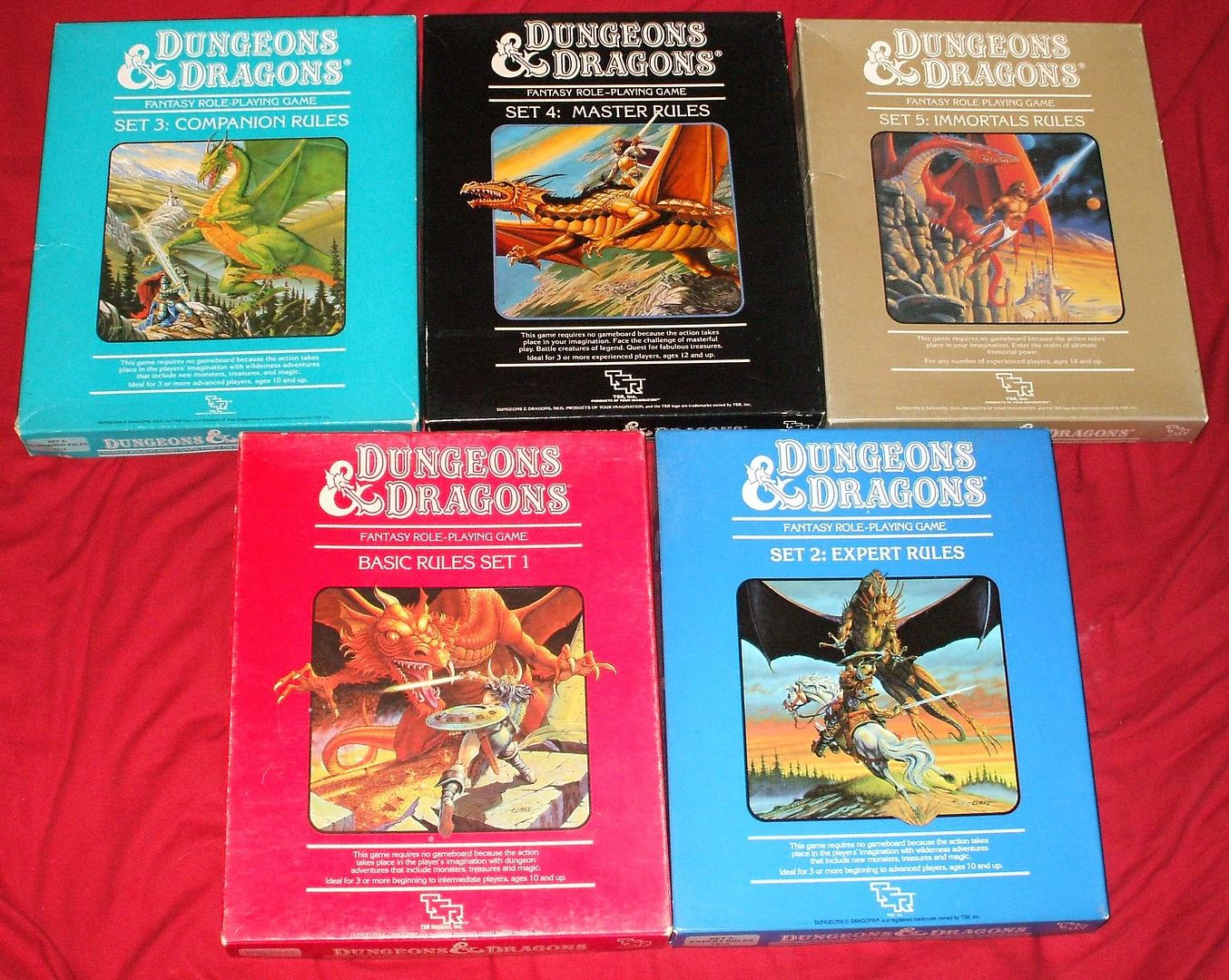 |
| With BECMI, changing the game was baked into the level structure. |
When your PCs master one area of your game, like defeating any combination of monsters you can throw at them in two rounds or getting filthy rich, then you have a choice. You can continue to ramp up the power level on your existing game style until something breaks, or you can change the game and challenge everyone at the table with something different. I've had luck with changing the focus of the game from a dungeon crawl to a political game in the king's court. I've noticed as the players hit the transition point between mastering the old arena and playing in the new one, they usually fumble badly as they try to figure out the new rules for their characters.
Those fumbles make solid story foundations, as your players will carry the memory of that humiliation with them until they can exact their revenge. Once they finally figure out what's happening in the power game and how the weaselly adviser to the king used them as pawns, your players are hooked on making him pay for what he did to them. They'll put all of their gaming effort toward that one goal, and when the Grand Revenge Plan finally reaches its conclusion, everyone smiles with satisfaction at a job well done and a game well run.
Feelings of satisfaction reward everybody involved for changing the game and buying into the story. Player engagement for the win!
2011-10-19
Lessons from My First Time GMing
I remember being a mostly solitary kid. Alternating school years between my mother and father didn't leave me a whole lot of room to build a social group in elementary school. I got my first D&D Basic set in 1981 and I devoured it. I wrote up characters and started running them through adventures by myself. I memorized the rules by running games for myself.
I managed to talk my father into trying D&D. He rolled up a first level Thief and kitted himself out. I dusted off the Keep of the Borderlands, since I had run my own characters through the Caves of Chaos a few times. I had these grand visions of how the adventure would run. He'd start exploring and get into fights, then I'd have to figure out how to get him healed when he started getting hit, but he'd have all this treasure to sell back at the keep. I knew the rules, I knew the adventure - what could possibly go wrong?
My father subscribed to Games Magazine. Sometimes he fell asleep while working on the World's Most Ornery Crossword Puzzle with the hard clues. We played chess, though I think at that point I had played him to a draw after which we never played again. He seemed to like games, though my board game collection was at my mother's place. So I figured D&D would be a good fit for us.
Running (Ruining?) My First Game
Dad's Thief was ready to go, and we started. I decided to jump to the meat of the adventure and started describing the entry to the valley containing the Caves of Chaos. Dad interrupted me with a question. I don't remember the exact conversation, but it went a little something like this.
"Why am I here?" he asked.
"What do you mean?"
"I mean what's my motivation? Why did I decide to come to explore these caves?"
That one I knew. "You heard rumors about treasure being held by the monsters here. You're a Thief and want to get rich."
"But if I'm a Thief, why wouldn't I wait for others to explore the cave and then ambush them to take the treasure after they did the hard part of fighting the monsters?"
My 12 year old brain wasn't ready for this line of questioning. "Because you're an adventurer. Adventurers wouldn't do that. Adventurers fight monsters and take their treasure."
I don't remember the rest of the adventure, as I was too busy fretting over the fact that he didn't understand or like the game. I felt sad and a little hurt. Here I thought that we'd have this grand adventure and it'd be so fun and we'd laugh and he'd want to play again and this would be the start of something really cool. I already loved the game, but he apparently didn't want to play, so he started challenging what we were playing before we even started. What the heck?
Granted, most of those reactions were new hormones in a 12 year old brain firing whatever emotional neurons they could trigger, but the hurt stuck with me. I thought he didn't like the game I ran and we never played again.
So, my first GMing experience involved strapping my father to the tracks and railroading him toward the game I wanted to play leading to almost-certain death for his character. Not my proudest moment, but it taught me two very important lessons.
Lesson The First: Always Provide A Path To "Why?"
The fact that he asked "Why am I here?" before even playing brought home the idea of hooking a character into a setting. Sure, you can play in a box far removed from everything else, but that's not going to give you the kind of immersion that is the bread and butter of role playing.
Other games answer "Why?" with "Because it's in the rules." Case closed. D&D and other RPGs invite everyone playing to challenge everything. All the rules are guidelines, so feel free to tweak the rules to make whatever you want to play come to life.
"Why?" is a great communication tool and story generator. It tells you exactly what your player is interested in exploring, and if you don't have a good answer either because it's not germane to the plot or you don't know yet, you can always turn it around on a player and start collaborating on elements of the game world. These explorations can be the most powerful in the game because you and your player are both invested in creating your world.
My 12 year old self saw "Why?" as a challenge to its authority and turtled up. My vastly more experienced GM self can look back and see a missed opportunity to explore the character and make a personalized adventure out of the most-often-run module on the planet. I thought I was doing us a favor by skipping the town and jumping to the adventure. I thought that fighting monsters by rolling dice sat at the heart of D&D. To a certain extent that's true, but the bigger and more important part of role playing involves inhabiting a character and telling a story. If I don't allow for a story to develop and work to make it interesting, I might as well play chess instead of D&D.
Lesson The Second: Make Sure Everyone Is Playing The Same Game
Yes, it's about the social contract. I wanted to run an adventure about fighting orcs and getting treasure and show my dad what a cool game this was because you could do anything. He wanted to talk about his character and play a more subtle game involving plotting and getting away with Grand Theft Treasure. We were expecting different games when we started playing. And we never figured out how to talk through it and play the same game.
That's why taking the time and figuring out the kind of game everybody wants to play is so important. Without unanimous support of that decision everybody at the table will be playing a different game, and eventually someone will get disillusioned with the whole process and walk away.
Having the conversation can be as easy as talking about house rules, or it can get into setting and style of play, or you can start with "I don't know how this is going to turn out, so if you're uncomfortable at any time please let me know so we can change things." There is no right way to have a conversation about a social contract, as long as everybody is clear on where the "Too Far" line is so nobody crosses it and starts hurting feelings.
Back in 1981, I had zero idea about social contracts. 30 years later I think I've found a secret to good GMing: leave your expectations at the door when you sit down at the table. Let the game go where everybody wants it to, not just you. Sure, you can end up leading a rebellion against a lich instead of fighting the dragon for money, but if everybody has fun what's the harm? More on this in future posts, I'm sure.
These aren't novel concepts, but they were to me 30 years ago. If my experience can get you to GM better than you are today, I'm happy.
I still have a distant relationship with my father. Our paths diverged, mine for sanity's sake in high school and his because he changed so much for the better but he's still ashamed of what he was. And as I look forward to gaming with my daughter, I have some guidelines that I can use to steer our relationship to a much better place. Role playing will be a much different experience with her, and I just can't wait.
In related news, I'll be starting to run games for at least one group of kids soon. Starting to work through details now. More as it happens.
I managed to talk my father into trying D&D. He rolled up a first level Thief and kitted himself out. I dusted off the Keep of the Borderlands, since I had run my own characters through the Caves of Chaos a few times. I had these grand visions of how the adventure would run. He'd start exploring and get into fights, then I'd have to figure out how to get him healed when he started getting hit, but he'd have all this treasure to sell back at the keep. I knew the rules, I knew the adventure - what could possibly go wrong?
My father subscribed to Games Magazine. Sometimes he fell asleep while working on the World's Most Ornery Crossword Puzzle with the hard clues. We played chess, though I think at that point I had played him to a draw after which we never played again. He seemed to like games, though my board game collection was at my mother's place. So I figured D&D would be a good fit for us.
Running (Ruining?) My First Game
Dad's Thief was ready to go, and we started. I decided to jump to the meat of the adventure and started describing the entry to the valley containing the Caves of Chaos. Dad interrupted me with a question. I don't remember the exact conversation, but it went a little something like this.
"Why am I here?" he asked.
"What do you mean?"
"I mean what's my motivation? Why did I decide to come to explore these caves?"
That one I knew. "You heard rumors about treasure being held by the monsters here. You're a Thief and want to get rich."
"But if I'm a Thief, why wouldn't I wait for others to explore the cave and then ambush them to take the treasure after they did the hard part of fighting the monsters?"
My 12 year old brain wasn't ready for this line of questioning. "Because you're an adventurer. Adventurers wouldn't do that. Adventurers fight monsters and take their treasure."
I don't remember the rest of the adventure, as I was too busy fretting over the fact that he didn't understand or like the game. I felt sad and a little hurt. Here I thought that we'd have this grand adventure and it'd be so fun and we'd laugh and he'd want to play again and this would be the start of something really cool. I already loved the game, but he apparently didn't want to play, so he started challenging what we were playing before we even started. What the heck?
Granted, most of those reactions were new hormones in a 12 year old brain firing whatever emotional neurons they could trigger, but the hurt stuck with me. I thought he didn't like the game I ran and we never played again.
So, my first GMing experience involved strapping my father to the tracks and railroading him toward the game I wanted to play leading to almost-certain death for his character. Not my proudest moment, but it taught me two very important lessons.
Lesson The First: Always Provide A Path To "Why?"
The fact that he asked "Why am I here?" before even playing brought home the idea of hooking a character into a setting. Sure, you can play in a box far removed from everything else, but that's not going to give you the kind of immersion that is the bread and butter of role playing.
Other games answer "Why?" with "Because it's in the rules." Case closed. D&D and other RPGs invite everyone playing to challenge everything. All the rules are guidelines, so feel free to tweak the rules to make whatever you want to play come to life.
"Why?" is a great communication tool and story generator. It tells you exactly what your player is interested in exploring, and if you don't have a good answer either because it's not germane to the plot or you don't know yet, you can always turn it around on a player and start collaborating on elements of the game world. These explorations can be the most powerful in the game because you and your player are both invested in creating your world.
My 12 year old self saw "Why?" as a challenge to its authority and turtled up. My vastly more experienced GM self can look back and see a missed opportunity to explore the character and make a personalized adventure out of the most-often-run module on the planet. I thought I was doing us a favor by skipping the town and jumping to the adventure. I thought that fighting monsters by rolling dice sat at the heart of D&D. To a certain extent that's true, but the bigger and more important part of role playing involves inhabiting a character and telling a story. If I don't allow for a story to develop and work to make it interesting, I might as well play chess instead of D&D.
Lesson The Second: Make Sure Everyone Is Playing The Same Game
Yes, it's about the social contract. I wanted to run an adventure about fighting orcs and getting treasure and show my dad what a cool game this was because you could do anything. He wanted to talk about his character and play a more subtle game involving plotting and getting away with Grand Theft Treasure. We were expecting different games when we started playing. And we never figured out how to talk through it and play the same game.
That's why taking the time and figuring out the kind of game everybody wants to play is so important. Without unanimous support of that decision everybody at the table will be playing a different game, and eventually someone will get disillusioned with the whole process and walk away.
Having the conversation can be as easy as talking about house rules, or it can get into setting and style of play, or you can start with "I don't know how this is going to turn out, so if you're uncomfortable at any time please let me know so we can change things." There is no right way to have a conversation about a social contract, as long as everybody is clear on where the "Too Far" line is so nobody crosses it and starts hurting feelings.
Back in 1981, I had zero idea about social contracts. 30 years later I think I've found a secret to good GMing: leave your expectations at the door when you sit down at the table. Let the game go where everybody wants it to, not just you. Sure, you can end up leading a rebellion against a lich instead of fighting the dragon for money, but if everybody has fun what's the harm? More on this in future posts, I'm sure.
These aren't novel concepts, but they were to me 30 years ago. If my experience can get you to GM better than you are today, I'm happy.
I still have a distant relationship with my father. Our paths diverged, mine for sanity's sake in high school and his because he changed so much for the better but he's still ashamed of what he was. And as I look forward to gaming with my daughter, I have some guidelines that I can use to steer our relationship to a much better place. Role playing will be a much different experience with her, and I just can't wait.
In related news, I'll be starting to run games for at least one group of kids soon. Starting to work through details now. More as it happens.
2011-05-02
Wombat's Path VIII: Why The Retrospective?
For my own organizational sanity, here's the entire series of Wombat's Path posts with links.
"So Wombat," you may ask, "why the heck did you write up Wombat's Path and document your gaming experiences over the past 30 years?" And you pose an excellent question.
The ego wants what the ego wants. I'll admit to shameless ego-stroking as a reason. What person with almost 3/4 of his life tied up in one activity wouldn't want to celebrate that, especially with a 30th anniversary coming up this fall? I'm not a slave to my ego, but the process of writing brought home to me that I may have learned something useful to share about running and playing games. That feels good to me.
 Still selfishly, I can mine these posts for blog fodder to expand on an aspect of gaming that I find interesting or useful. Finding topics and generating content for a blog can be challenging if you paint yourself into a corner. I'm purposely not limiting topics for this particular public writing endeavor. I've done so many rules hacks on the fly while GMing that at least one of them could make sense to you. So many times I have wanted a supplement that would cover something missing in the rules as written, so it makes sense to expand on or add a system that would increase the depth and enjoyment in a game. So I'll do exactly that in this place as much as I'm able. I may not know what you'll find useful, but I hope I can solicit your help to guide me.
 On a more altruistic note, documenting my game experiences brings my past into focus and make me think about how my gaming preferences have matured over the past 30 years. This gives me a well of learned lessons to draw from as I try to share my experiences where appropriate. Not everyone games the same way, and not everyone cares to hear advice. Though in the cases where people need help, I'll do my best to get you where you need to go.
If you have any questions about GMing or comments about anything I've written, don't hesitate to get in touch and I'll do what I can. I will answer, even if it's just a quick "Thanks!" You can leave a comment to any blog post, or twittle me at @twwombat, or email me at jim (at) twwombat (dot) com.
Yes, I'm playing with pictures linked to my Amazon referral account. Sue me. Or better yet, click through one of them and the Google ad to put a penny or two in my account and then hop in your '91 Indignant Huff and drive away. I think the pictures add a little graphical oomph which is great for a non-graphics person like myself. Also, please let me know what you think about the new background I put up in the past couple of weeks.
Thanks for reading!
- I: The Early Years
- II: Off To College
- III: Sophomoric Pursuits
- IV: Focus On Story
- V: To All The Games I've Played Before
- VI: The LARP Detour
- VII: Then 'Til Now
- VIII: Why The Retrospective? (Yes, it's a link to this post. "Entire series" means exactly that.)
"So Wombat," you may ask, "why the heck did you write up Wombat's Path and document your gaming experiences over the past 30 years?" And you pose an excellent question.
The ego wants what the ego wants. I'll admit to shameless ego-stroking as a reason. What person with
almost 3/4 of his life tied up in one activity wouldn't want to celebrate that, especially with a 30th anniversary coming up this fall? I'm not a slave to my ego, but the process of writing brought home to me that I may have learned something useful to share about running and playing games. That feels good to me.Still selfishly, I can mine these posts for blog fodder to expand on an aspect of gaming that I find interesting or useful. Finding topics and generating content for a blog can be challenging if you paint yourself into a corner. I'm purposely not limiting topics for this particular public writing endeavor. I've done so many rules hacks on the fly while GMing that at least one of them could make sense to you. So many times I have wanted a supplement that would cover something missing in the rules as written, so it makes sense to expand on or add a system that would increase the depth and enjoyment in a game. So I'll do exactly that in this place as much as I'm able. I may not know what you'll find useful, but I hope I can solicit your help to guide me.Contrary to the beliefs of 17-year-old me, history is important. History teaches newer generations about previous forays and failures, and hopefully saves some trial-and-error time when working on new ideas. It gives us a sense of what's come before and a sense of involvement in something bigger than just the people involved. However, 17-year-old me got burned out on 5 years of American History that studied battles and skipped over the meat of motivation.
On a more altruistic note, documenting my game experiences brings my past into focus and make me think about how my gaming preferences have matured over the past 30 years. This gives me a well of learned lessons to draw from as I try to share my experiences where appropriate. Not everyone games the same way, and not everyone cares to hear advice. Though in the cases where people need help, I'll do my best to get you where you need to go. |
| Yummy gaming book! Order 2, they're small! |
Yes, I'm playing with pictures linked to my Amazon referral account. Sue me. Or better yet, click through one of them and the Google ad to put a penny or two in my account and then hop in your '91 Indignant Huff and drive away. I think the pictures add a little graphical oomph which is great for a non-graphics person like myself. Also, please let me know what you think about the new background I put up in the past couple of weeks.
Thanks for reading!
2011-03-25
Gaming Maxims
OK, intarwebz. I've heard that you're at least mildly interested in manifestos, so I'm looking for the ultimate gamer's manifesto. If you have a link to something that you simply adore, please share with the class in the comments below.
Failing finding a pre-packaged page of gaming yumminess, I'll compile a list of gaming maxims. Which means I turn to you for input. I'm looking for the guiding principles you bring to a game and any quick snippets of wisdom that resonate with you when sitting down to play. What quote always rings in your ears when you're gaming? It can be for RPGs or boardgames, for GMs or for players. Doesn't matter to me.
If it's uttered at a gaming table and everyone nods and says, "True dat," I want you to take the 90 seconds to type it in and share it in the comments below. Please leave me enough info to credit you for your contribution.
Once I have a critical mass, I'll compile the quotes and post a link to them here and on Twitter and Facebook.
Here are some of my favorites:
- The story always trumps the rules.
- If it fuels the story and makes the game richer for everyone, I’m all for any changes players want to make.
- Roll the dice only when role-playing has failed.
- Wheaton's Law: Don't be a dick.
- Let the Wookie win.
- "Mama needs a new pair of shoes!" *roll dice* "I got a rock."
I can't wait to hear what guides you at the table. And thank you for taking the time to read and respond.
Failing finding a pre-packaged page of gaming yumminess, I'll compile a list of gaming maxims. Which means I turn to you for input. I'm looking for the guiding principles you bring to a game and any quick snippets of wisdom that resonate with you when sitting down to play. What quote always rings in your ears when you're gaming? It can be for RPGs or boardgames, for GMs or for players. Doesn't matter to me.
If it's uttered at a gaming table and everyone nods and says, "True dat," I want you to take the 90 seconds to type it in and share it in the comments below. Please leave me enough info to credit you for your contribution.
Once I have a critical mass, I'll compile the quotes and post a link to them here and on Twitter and Facebook.
Here are some of my favorites:
- The story always trumps the rules.
- If it fuels the story and makes the game richer for everyone, I’m all for any changes players want to make.
- Roll the dice only when role-playing has failed.
- Wheaton's Law: Don't be a dick.
- Let the Wookie win.
- "Mama needs a new pair of shoes!" *roll dice* "I got a rock."
I can't wait to hear what guides you at the table. And thank you for taking the time to read and respond.
2010-09-14
The Gaming Experience and Virginity
I want to expand on an idea I just tweeted.
He talks about magicians losing their "visual virginity" and how they can't see anything with innocent eyes any more since they know the trick and their job is to fool the audience.
How does this tie to gaming? Many of the laments I've heard over the past few years are tied to re-experiencing the sense of magic in games. "Today's games aren't as good/exciting/mysterious/wonderful as the games in the old days."
The games haven't changed. We have. We've lost our gaming virginity. We've played and discovered and learned, and now our minds have categorized and been limited by our experiences with the games we've played. We know not to try things because they don't work well. We know that D&D isn't great for non-combat encounters since the point of the game as written is to meet interesting monsters, beat them up, and loot the bodies. We know the Monster Manual entries. We memorized THACO tables. Fill in your own examples, you've got plenty to choose from.
Point is, we'll never have that experience of newness ever again because of our past experience with the game. We've lost our innocence, and that means we've learned to limit ourselves. The glory of children comes from their fearlessness, their lack of knowledge of what's possible, and their ability to throw their entire selves into what they do. How many 40 year olds do you see balancing on one foot on the back of the sofa in an attempt to do a flip? Not too many.
In our quest to discover what the game's all about, we paint more details onto our mental model of the game, and we eventually make that mental model solid, unchanging, brittle, and much less fun.
We have ways around this to re-inject a sense of wonder into the game:
1) Become a GM. Game Masters perform magic by bringing a world to life. They can take their knowledge and relive their innocence vicariously through their players. Nothing is more satisfying to me as a GM than watching a player's face light up because they've had a breakthrough in the context of the game.
2) Have experiences in new contexts. Whether you play a new game system every month, or shake it up and do a game at a con instead of at the dining room table, changing the context can change the game. I remember my first LARP experience - at one point I was huddled in a bathroom in a friend's apartment ready to cast a teleport spell because the lynch mobs ran the streets. It felt real because I let myself get into my character and I had no expectations about what was possible.
3) Remove the system. Much of the shared experience comes from the shared rule set. A player may know more about how the rules work than the GM does. In the past I have removed the rules from the game with success. Players create their characters and then I gathered all the character sheets during play. The players focus more on the world of the game since they don't have a list of pre-fab rule options on a sheet in front of them. The extreme result of this is to play without rules at all, but that requires absolute trust between every person in the entire group.
I may focus some of these ideas into another post, but I just wanted to get my ideas down before life washed them away.
The desire for Old Skool gaming is the quixotic quest to re-experience gaming for the first time. http://bit.ly/dbopYY - From @gelconfThe video shows a talk from 2009's Gel Conference given by a sleight-of-hand magician named Jamy Ian Swiss. He talks about user experience and how marketing is about empathy, about connecting with people, about getting inside your audience's head and telling a story that resonates with the person going through the experience you're providing. At the end, he does a magic trick with a volunteer to illustrate his point. Trick is, the volunteer is the only one who can't see how the trick works - then he apologizes to the audience for spoiling the experience of that trick for them forever.
He talks about magicians losing their "visual virginity" and how they can't see anything with innocent eyes any more since they know the trick and their job is to fool the audience.
How does this tie to gaming? Many of the laments I've heard over the past few years are tied to re-experiencing the sense of magic in games. "Today's games aren't as good/exciting/mysterious/wonderful as the games in the old days."
The games haven't changed. We have. We've lost our gaming virginity. We've played and discovered and learned, and now our minds have categorized and been limited by our experiences with the games we've played. We know not to try things because they don't work well. We know that D&D isn't great for non-combat encounters since the point of the game as written is to meet interesting monsters, beat them up, and loot the bodies. We know the Monster Manual entries. We memorized THACO tables. Fill in your own examples, you've got plenty to choose from.
Point is, we'll never have that experience of newness ever again because of our past experience with the game. We've lost our innocence, and that means we've learned to limit ourselves. The glory of children comes from their fearlessness, their lack of knowledge of what's possible, and their ability to throw their entire selves into what they do. How many 40 year olds do you see balancing on one foot on the back of the sofa in an attempt to do a flip? Not too many.
In our quest to discover what the game's all about, we paint more details onto our mental model of the game, and we eventually make that mental model solid, unchanging, brittle, and much less fun.
We have ways around this to re-inject a sense of wonder into the game:
1) Become a GM. Game Masters perform magic by bringing a world to life. They can take their knowledge and relive their innocence vicariously through their players. Nothing is more satisfying to me as a GM than watching a player's face light up because they've had a breakthrough in the context of the game.
2) Have experiences in new contexts. Whether you play a new game system every month, or shake it up and do a game at a con instead of at the dining room table, changing the context can change the game. I remember my first LARP experience - at one point I was huddled in a bathroom in a friend's apartment ready to cast a teleport spell because the lynch mobs ran the streets. It felt real because I let myself get into my character and I had no expectations about what was possible.
3) Remove the system. Much of the shared experience comes from the shared rule set. A player may know more about how the rules work than the GM does. In the past I have removed the rules from the game with success. Players create their characters and then I gathered all the character sheets during play. The players focus more on the world of the game since they don't have a list of pre-fab rule options on a sheet in front of them. The extreme result of this is to play without rules at all, but that requires absolute trust between every person in the entire group.
I may focus some of these ideas into another post, but I just wanted to get my ideas down before life washed them away.
Subscribe to:
Posts (Atom)